More About This Card
Dogs have an extraordinary sense of smell, a skill that is enhanced not just by their powerful olfactory system but also by the way they use their noses. Research has shown that dogs use their nostrils differently depending on the type of scent they encounter. This fascinating aspect of canine biology offers insights into how dogs interact with their environment and how they have evolved as predators and companions.
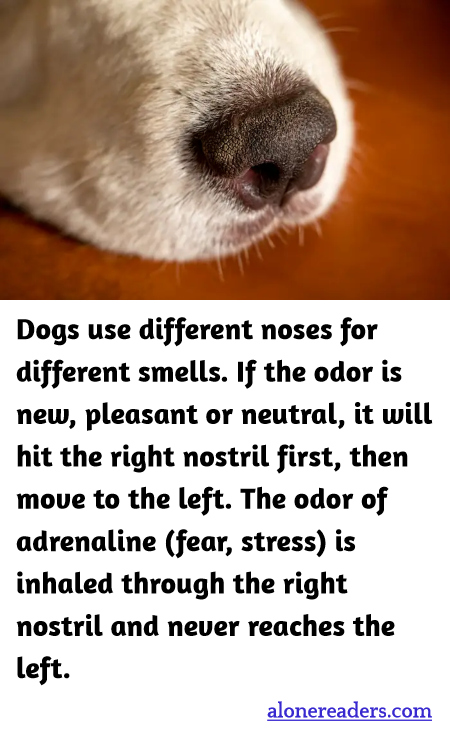
When a dog encounters a new, pleasant, or neutral smell, it typically hits the right nostril first. This initial contact allows the right side of the brain, which is adept at processing novel and non-threatening information, to assess the scent. The smell then moves to the left nostril, which is connected to the left side of the brain, known for its role in analyzing detailed information and making more complex associations and memories. This dual-step process helps the dog not only recognize but also remember and react appropriately to various smells.
Interestingly, the scent of adrenaline—a marker of fear or stress in both animals and humans— is inhaled differently by dogs. Such scents are detected solely through the right nostril. Studies suggest that when a dog smells adrenaline, it doesn't pass the scent to the left nostril at all. The significance of this one-sided processing is linked to the dog's survival instincts. The right hemisphere of the brain is more attuned to deal with threats and aggression. By keeping the scent in the right nostril, the dog’s brain can focus on quick responses, likely a trait developed through evolution for immediate reaction to danger, facilitating either fight or flight.
This extraordinary use of different nostrils for different types of smells underscores the complexity of canine senses and provides evidence of their highly evolved predator instincts. It also illustrates the subtle yet intricate ways in which dogs perceive and respond to their surroundings. For pet owners, trainers, and researchers, understanding these patterns can improve communication with dogs and enhance training methods, ensuring a healthier and more responsive interaction with these loyal companions. Understanding these olfactory capabilities reminds us of the unique bonds humans share with dogs and the depth of their sensory world.