More About This Card
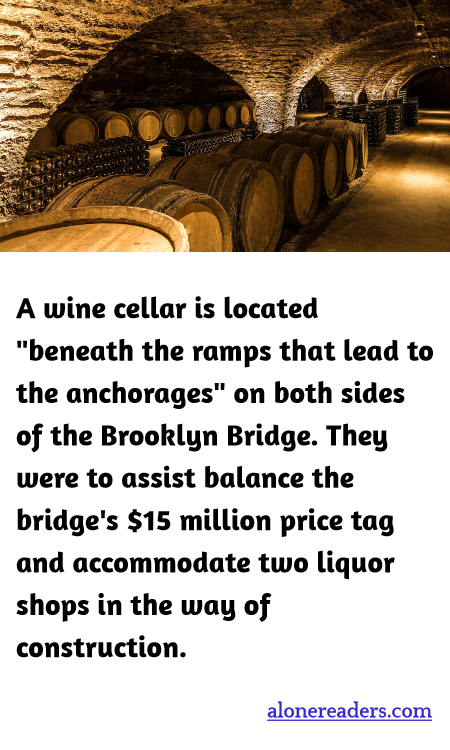
Beneath the iconic Brooklyn Bridge, not just historical masonry and engineering marvels lie hidden, but also remnants of a lesser-known commercial venture: wine cellars positioned strategically "beneath the ramps that lead to the anchorages." This unique use of space served multiple purposes, not only facilitating a novel way to utilize urban space but also aiming to financially offset the considerable $15 million cost of constructing the bridge.
During the late 19th century, as cities like New York expanded both upward and outward, every available space was considered for profitable use. The Brooklyn Bridge, completed in 1883, became a symbol of ingenuity and the connective lifeline between Manhattan and Brooklyn. However, the immense cost of its construction prompted city planners and engineers to think creatively about ways to recoup some of the expenses. As construction progressed, it was discovered that the massive anchorages—granite structures anchoring the suspension cables—were ideally suited for wine storage due to their cool, stable temperatures and reduced exposure to vibrations. Thus, the cellar concept was integrated into the bridge's design.
The cellars were leased to private wine sellers who stored their inventory in what could be considered one of the most unique wine cellar locations in the world. Not only did this assist in balancing the hefty price tag of the bridge, but it also strategically reallocated space that would otherwise remain unused. The creation and leasing of these wine cellars were seen as an innovative example of urban space management, and they contributed to the trend of maximizing urban real estate value, a principle that continues to shape cities today.
However, the use of these cellars for storing wine was relatively short-lived. With advancements in transportation and changes in urban infrastructure and real estate priorities, the cellars were eventually repurposed for other uses. Yet, the brief period during which they operated stands as a testimony to the multifunctional use of public works and the entrepreneurial spirit intertwined with urban development.
Today, the story of the Brooklyn Bridge wine cellars remains a fascinating chapter in New York City's history, illustrating how even the most functional structures can host unexpected roles. The bridge not only connected two major parts of the city but also captured the innovative and resourceful spirit of an era that leveraged every opportunity, including beneath its very ramps, to support the city's growth and vibrancy.