More About This Card
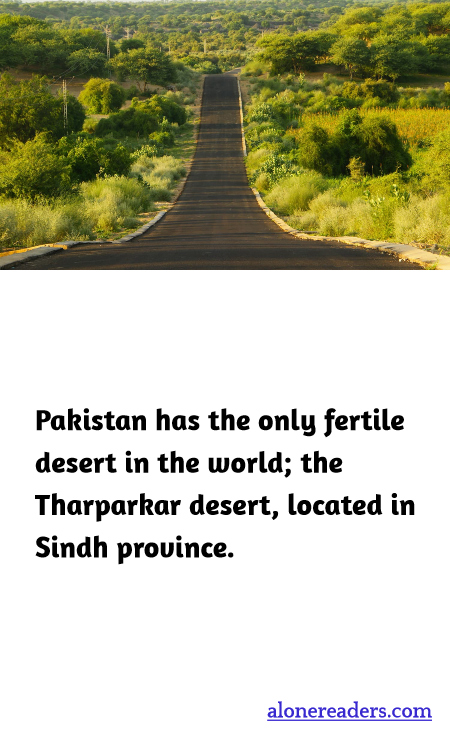
The Tharparkar desert, situated in the Sindh province of Pakistan, stands out globally as the only fertile desert, distinguishing itself from more commonly known arid deserts. This unique ecological zone spans over 22,000 square kilometers and is characterized by its sandy dunes and minimal rainfall, yet it supports a surprising level of biodiversity and human habitation compared to other deserts around the world.
Key to Tharparkar’s fertility is the monsoon season, which brings adequate rain to sustain agriculture and replenish natural water reservoirs in the region. Unlike typical deserts where the flora and fauna are sparsely scattered, Tharparkar hosts a variety of life forms, including a rich array of vegetation that supports both livestock and wildlife. Local communities primarily engage in agriculture, relying on crops such as millet, pulses, and wheat, which are sown after the rainfalls. This cultivation system is predominantly based on rain-fed farming techniques that have been developed and refined over generations.
Tharparkar also supports a diverse range of wildlife. It is home to unique species adapted to its semi-arid conditions, including peafowls, chinkaras, and desert foxes, which are seldom found in other parts of the country. This makes Tharparkar not only a natural reserve for unique species but also a critical area for biodiversity conservation.
The human population in the Tharparkar district is primarily rural and engages in an agrarian lifestyle that's closely intertwined with the environment. Traditional methods of farming and livestock rearing dominate, creating a lifestyle that remains sustainable and closely knit with the rhythms of the natural environment. Moreover, the desert also holds cultural significance for the local communities who celebrate various festivals that mark the seasons and farming cycles, reflecting a harmonious relationship with nature.
Nonetheless, life in Tharparkar is not without its challenges. The desert is prone to droughts when the monsoons are delayed or less abundant. These periods can lead to severe water shortages and food scarcity, threatening both human and animal lives. The situation calls for enhanced management strategies, including the creation of sustainable water resources and the implementation of advanced agricultural practices to cope with the variable climate intrinsic to the region.
In summary, Tharkparkar’s unique status as the world's only fertile desert makes it an important ecological and cultural treasure. It showcases how human resilience and adaptability can coincide peacefully with nature, even in seemingly inhospitable conditions. However, continued ecological and humanitarian efforts are necessary to preserve this distinctive environment and support its inhabitants’ way of life.