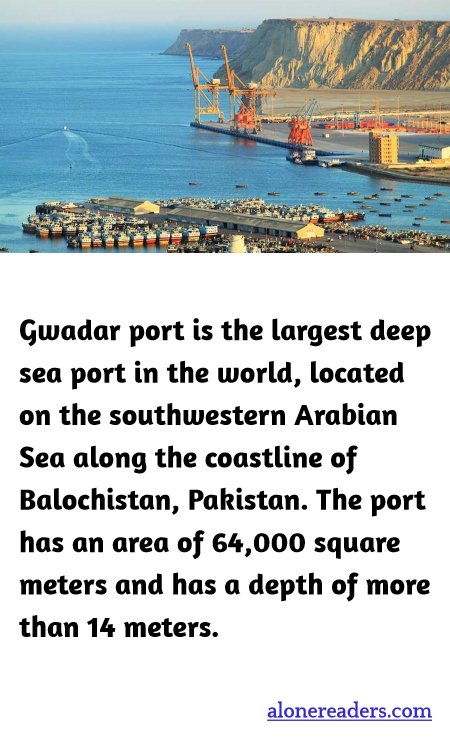
Gwadar Port, located on the southwestern coast of Balochistan, Pakistan along the Arabian Sea, is recognized as one of the world's largest deep sea ports. This strategic hub spans over 64,000 square meters and boasts a depth exceeding 14 meters, enabling it to accommodate some of the largest vessels in maritime commerce. Developed as part of China's ambitious Belt and Road Initiative, the port is not just a facility for cargo handling but is envisaged as a catalyst for economic transformation in the region.
The importance of Gwadar Port extends beyond its physical attributes. It is strategically positioned at the mouth of the Persian Gulf, just outside the Strait of Hormuz, through which approximately 20% of the world's petroleum passes. This makes Gwadar a pivotal gateway for trade routes in Central Asia, the Middle East, and beyond. The development of this port is coupled with the China-Pakistan Economic Corridor (CPEC), a massive infrastructure project aiming to connect Gwadar to China’s Xinjiang region through a network of highways, railways, and pipelines. This corridor is expected to significantly cut transport times and costs for cargo movement between the two countries and further into Europe and Asia.
Moreover, Gwadar is being developed into a full-fledged commercial hub with the establishment of a Free Zone, expected to attract investment in manufacturing, logistics, and other sectors. The Gwadar Free Zone aims to leverage its strategic geographic positioning by offering businesses competitive incentives, such as tax breaks and custom duty benefits, aimed at fostering economic activity and attracting foreign investment. This zone is anticipated to create numerous job opportunities and spur economic development in the region.
However, the development of Gwadar Port is not without challenges. It requires substantial investment in both infrastructure and security measures. There have been concerns regarding the displacement of local communities and the environmental impact of large-scale construction activities. Moreover, geopolitical tensions in the region also pose potential risks to the port's operational security and efficiency.
In conclusion, Gwadar Port holds significant promise as a linchpin in regional economic development and as a vital component of the global shipping framework due to its strategic location and deep-water capabilities. Its full potential, however, hinges on the balanced integration of economic, social, and environmental considerations as well as stability in regional security dynamics. If these challenges can be addressed, Gwadar may well rise as a cornerstone in Pakistan’s economic revival and a crucial anchor in global trade networks.
