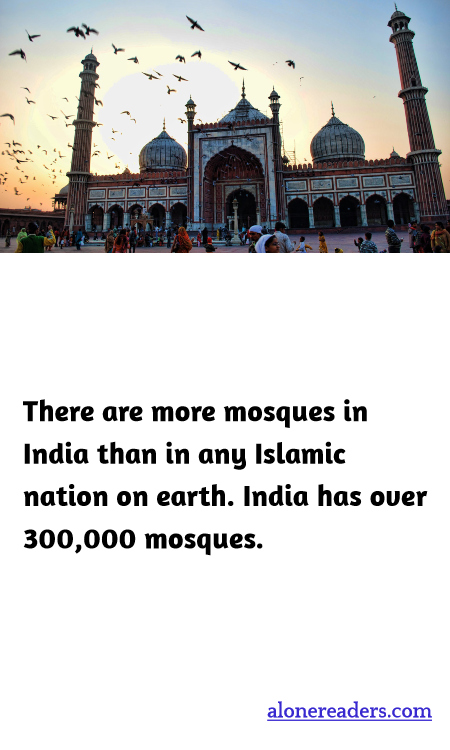
India is a country characterized by its incredible diversity, including religious practices, languages, and cultural rituals. Notably, it has a large number of mosques spread across its vast geography, more than in any Islamic nation. This fact highlights the eclectic fabric of Indian society where multiple religions coexist and have thrived for centuries.
While India is predominantly Hindu, it harbors a significant Muslim population. According to various estimates, there are over 300,000 mosques in India, a figure that surpasses any other country in the world, including predominantly Islamic nations. These mosques range from grand historical structures like the Jama Masjid in Delhi and the Mecca Masjid in Hyderabad to countless smaller mosques that serve local communities in towns and villages across the country.
The presence of such a large number of mosques underscores the strong Islamic cultural heritage that has been part of Indian history for over a millennium. Muslim rulers once governed significant portions of Indian territory, leaving behind a rich architectural and cultural legacy. This legacy includes famous monuments like the Taj Mahal and Fatehpur Sikri, which attract visitors from around the globe for both their historic significance and architectural grandeur.
Despite the presence of these mosques, India’s Muslim community faces various challenges, including socio-economic inequalities and communal tensions. Yet, these mosques remain a crucial part of the community’s social and spiritual fabric, acting as centers of religious practice, education, and community gatherings.
The existence of such a vast number of mosques not only reflects the demographic and religious diversity of India but also embodies the secular ethos inscribed in the country’s constitution. It underscores an important aspect of India’s identity: despite differences in creed, the Indian society is woven together by threads of shared history and cultural symbiosis. This coexistence and the harmony among disparate religious communities are what make India unique in its approach to secularism and multicultural integration.
