More About This Card
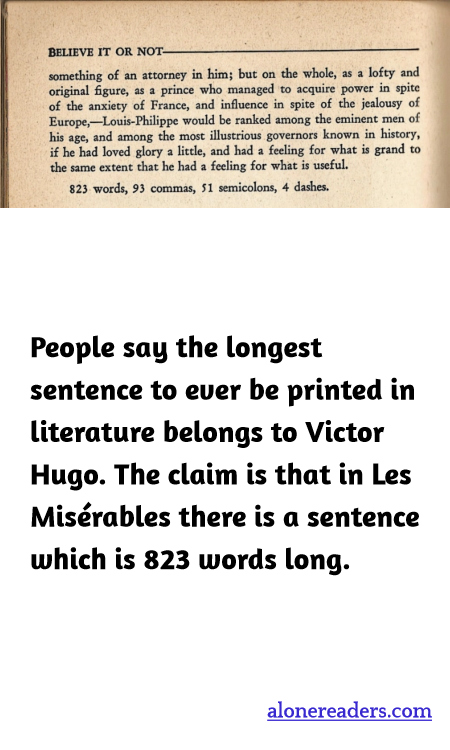
Victor Hugo, renowned for his masterful storytelling and intricate narratives, reportedly holds the record for the longest sentence in literature—a claim that points to an 823-word sentence in his epic novel, "Les Misérables." This monumental work, first published in 1862, is celebrated not only for its sheer length but also for its deep exploration of societal struggles and moral philosophy. The sentence in question exemplifies Hugo's style, weaving multiple clauses and ideas into a single, sprawling narrative thread.
"Les Misérables" is set against the backdrop of 19th-century France and delves into the lives of several characters who grapple with injustice, love, and redemption. Hugo uses his formidable command of language to paint a vivid picture of human emotions and societal conditions. The presence of such a lengthy sentence within this text does not seem out of place considering Hugo’s penchant for detailed descriptions and profound reflections that challenge the norms of brevity.
However, the claim of having the longest sentence might be more about capturing the essence of Hugo's expansive narrative style rather than holding a strict literary record. Literature, after all, includes numerous examples of lengthy sentences. For instance, James Joyce in "Ulysses" famously crafted sentences that extend over hundreds of words, exploring the stream of consciousness style that mirrors the complexities of thought.
The significance of Hugo’s 823-word sentence stretches beyond its word count. It encapsulates his ability to engage readers with flowing, dynamic prose that allows for deep immersion into the atmosphere and mindset of his characters. For both literary scholars and casual readers, this aspect of Hugo's writing remains a testament to his skill in blending detailed narrative with profound thematic substance.
In summary, while the length of the sentence is indeed notable, its true value lies in how it contributes to the overarching narratives of "Les Misérables," inviting readers to reflect deeply on the human condition. Victor Hugo's work is a poignant reminder of literature's power to both inform and transform, using not just the contents of its lengthy sentences, but the way these sentences are crafted to enrich storytelling.