More About This Card
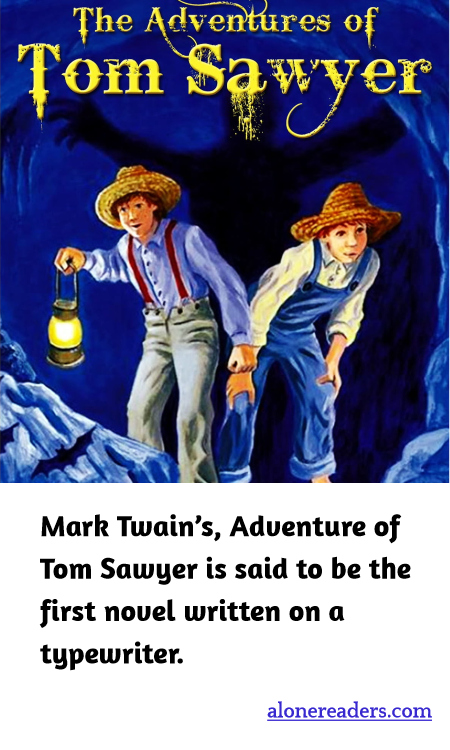
Mark Twain's "The Adventures of Tom Sawyer" has long been celebrated not only for its vivid portrayal of childhood adventure but also for its historical significance in the realm of literary creation. It is reputed to be the first novel ever composed on a typewriter. This claim highlights the intersection of technological advancement and literary innovation during Twain's time.
"The Adventures of Tom Sawyer," published in 1876, captures the essence of youth and freedom in the fictional town of St. Petersburg, Missouri, which is based on Twain’s own hometown of Hannibal. The novel navigates through the mischievous escapades of young Tom Sawyer and his friend Huck Finn, exploring themes of innocence, curiosity, and the complex social fabric of small-town America in the late 19th century.
Twain’s use of a typewriter during the creation of Tom Sawyer is particularly noteworthy as it marks a shift in how literary works were produced. This was at a time when typewriting technology was in its infancy. The typewriter Twain used was likely the Remington No. 1 or Sholes and Glidden typewriter, introduced in 1874. This innovation significantly influenced writing processes, potentially allowing Twain greater freedom of expression and the ability to revise his work more fluidly than handwriting permitted.
The integration of technology in his writing process might have also affected the narrative style of “Tom Sawyer.” The novel is known for its conversational tone and quick-paced dialogue, elements that are naturally complemented by the typewriter's ability to keep pace with a writer's thoughts and spoken expressions.
However, it's crucial to note that while Twain himself claimed in several correspondences that he had composed "Tom Sawyer" on a typewriter, some scholars debate the authenticity of this claim, citing a lack of direct physical evidence like a typed manuscript. Regardless of the dispute, the association of this major technological tool with Twain’s work underscores the transformative period in which the literary world was evolving with technological advancements.
Furthermore, Twain's purported adoption of the typewriter poses a symbolic reflection on the author's reputation as a forward-thinking writer willing to embrace new technologies that could push the boundaries of traditional literary creation. Through this convergence of technological innovation and creative storytelling, “The Adventures of Tom Sawyer” not only represents a pivotal moment in American literature but also in the broader history of written expression. Whether fact or myth, the story of Twain and his typewriter remains an intriguing footnote to an already compelling piece of literary history.