More About This Card
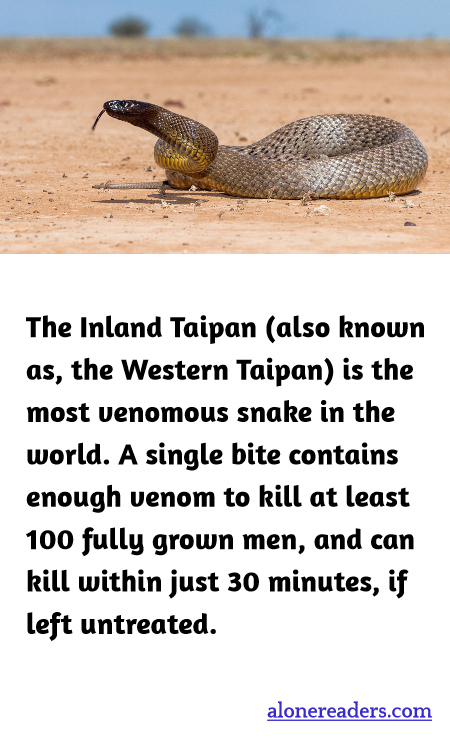
The Inland Taipan, or the Western Taipan, holds the title as the world's most venomous snake, a distinction that underscores its formidable presence in the animal kingdom. Found primarily in the arid regions of central Australia, this snake is not only reclusive but also exhibits a coloration that blends seamlessly with its desert surroundings, a sandy brown or light green depending on the season. Despite its fearsome reputation, the Inland Taipan is remarkably shy and avoids human contact, making incidents of biting extremely rare.
The venom of the Inland Taipan is astonishingly potent, containing toxins that can attack the nervous system, clot the blood, and damage muscles. Its bite delivers a rapid and overwhelming concoction of neurotoxins and myotoxins, making it capable of killing at least 100 adults with a single bite. The speed at which the venom acts is equally alarming, with potential death occurring within 30 minutes after envenomation. However, deaths are uncommon due to the snake's reclusive nature and the effectiveness of antivenom when administered promptly.
Handling or encountering an Inland Taipan in the wild is rare due to its elusive nature and preference for remote habitats. Scientists and snake enthusiasts continue to study this snake to understand better its behavior and the components of its venom, which has shown potential in developing medications for various medical conditions including blood clots and hypertension. Despite its potential for deadly interactions, the Inland Taipan plays an essential role in its ecosystem by controlling the populations of small mammals and other prey, demonstrating once more how even the most dangerous creatures contribute to the ecological balance of our planet.