More About This Card
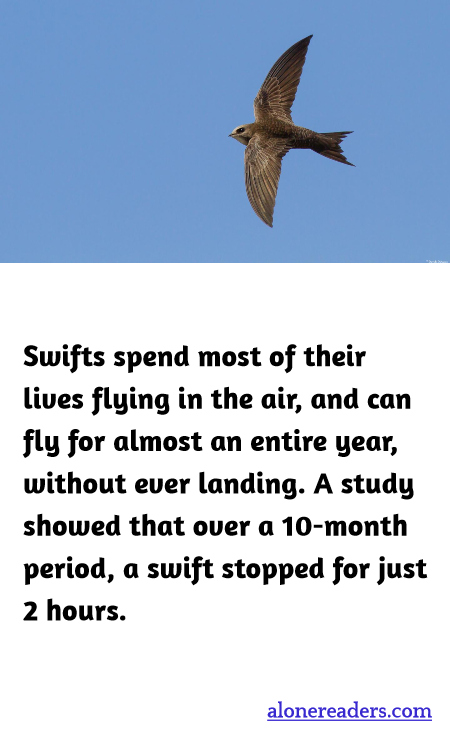
Swifts are truly remarkable creatures, especially when it comes to their flying capabilities. These small birds spend almost their entire lives in the air, a feat that is almost as incredible as it sounds. What's even more astonishing is that swifts can remain airborne for up to 10 months straight without landing. Research has shown that during these extensive periods aloft, they do everything on the wing—eating, sleeping, and even mating. It's a testament to their extraordinary adaptation to aerial life.
The adaptability of swifts to in-flight living is supported by their unique physical attributes. Their long, scythe-shaped wings and streamlined bodies allow for superb aerodynamic efficiency. This minimizes energy expenditure during extended flights. Swifts also have the ability to enter a state akin to sleeping while flying. By shutting down parts of their brain sequentially, swifts manage to rest without losing control mid-air, allowing them to conserve energy over long flights.
This relentless flying is driven by their constant search for food, which consists of insects caught in flight. The sky serves as a rich feeding ground for these birds, and their sharp eyesight aids them tremendously in spotting their prey. Not only do swifts spend a considerable amount of time on the move to feed, but their migratory patterns also add to their airtime. They travel thousands of kilometers during their migration from Europe to Africa, rarely ever touching down.
The rarity of their landings is usually during the breeding season when swifts nest. Nests are typically built in high, secluded places like cliff faces or high buildings, where they can easily take off into the air again. Once the breeding season is over, swifts are back to their life in the sky, hardly ever stopping.
Swifts' endurance in the air poses intriguing questions for scientists, especially regarding physical limits and sleep adaptation in birds. Understanding how swifts manage these feats could not only reveal more about their survival strategies but also offer insights into the possibilities of human adaptation to extreme conditions. The findings showing that swifts spend as little as two hours on a surface over many months encourage a deeper investigation into their biology and physiology, potentially contributing to broader biological and ecological studies. Their life nearly entirely in the skies remains a fascinating example of evolutionary innovation.