More About This Card
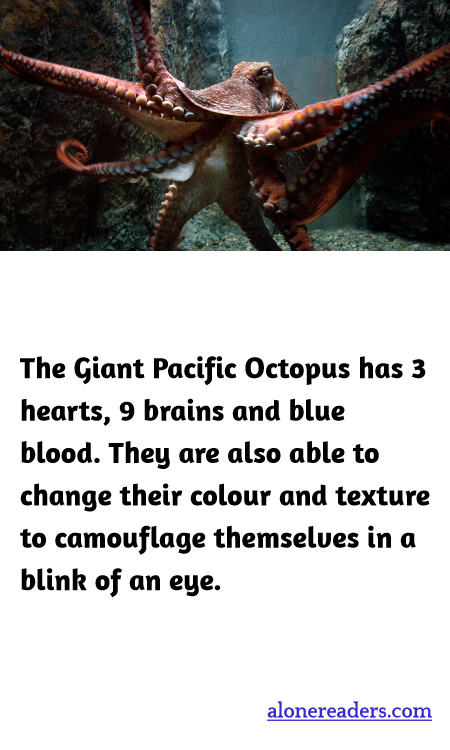
The Giant Pacific Octopus is one of the most fascinating creatures of the deep sea, known not only for its considerable size but also for its remarkable biological features. This octopus species possesses three hearts and nine brains, a unique anatomy that supports its complex physiological functions. Two of the hearts are responsible for pumping blood to the gills, where oxygen is absorbed, while the third heart circulates oxygenated blood to the rest of the body. However, during locomotion, when the octopus swims, the third heart ceases to beat, demonstrating a rare biological phenomenon.
Moreover, the presence of nine brains further adds to the creature’s mystique. The central brain controls the nervous system, while the other eight smaller brains, located in each arm, allow the Giant Pacific Octopus to process information from its surroundings efficiently. This decentralized brain system enables the arms to act independently, manipulating objects, detecting changes in the environment, and making decisions without the direct control from the central brain. This ability is crucial for survival in the unpredictable environment of the ocean.
Another intriguing aspect of the Giant Pacific Octopus is its blue blood. This unique characteristic is due to the presence of hemocyanin, a copper-containing protein, in its blood, which is more efficient in transporting oxygen in cold oceanic environments than the hemoglobin found in red blood. This adaptation is particularly beneficial for an organism living in deep and chilly waters.
Perhaps one of the most striking abilities of the Giant Pacific Octopus is its camouflage skill. The octopus can change both its color and texture in an instant, allowing it to hide from predators or ambush prey. The color changes are achieved through specialized skin cells known as chromatophores, which contain pigments that expand or contract to show different colors. In addition to color, the octopus can also alter the texture of its skin to match its surroundings, from smooth to ridged or bumpy, mimicking rocks, corals, or other elements in the ocean floor.
Through these extraordinary abilities — from having multiple hearts and brains to possessing blue blood and demonstrating remarkable camouflage techniques — the Giant Pacific Octopus remains a subject of avid interest and research in marine biology. Its unique adaptations not only shed light on evolutionary biology but also inspire innovations in technology and materials science, proving how much we can learn from the natural world.