More About This Card
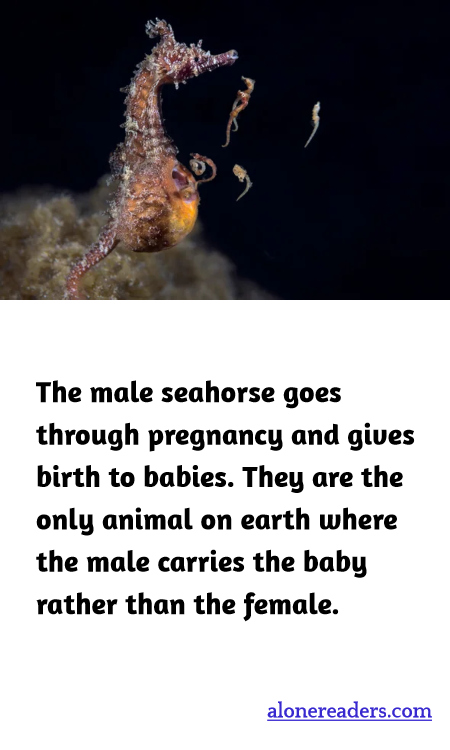
One of the most fascinating aspects of seahorse biology is their unique approach to reproduction, specifically the role that male seahorses play in the process. Unlike almost all other animal species, male seahorses are equipped to carry and give birth to offspring. This rare reproductive strategy sets them apart in the animal kingdom and challenges our conventional understanding of parental roles.
Seahorses are members of the genus Hippocampus, and the pregnancy process begins with a courtship dance that can last for several days. During this period, the female and male seahorse perform synchronized swimming movements. At the culmination of this dance, the female transfers her eggs into the male's brood pouch, a specialized structure located on the front side of the male’s body. This pouch functions somewhat like a womb, where the eggs are fertilized and incubated.
The male seahorse’s brood pouch regulates the salinity of the water inside to match the surrounding environment, ensuring the embryos develop in a stable, controlled setting. Additionally, it supplies the embryos with prolactin, the same hormone that helps mammals produce milk. This unique feature highlights the evolutionary adaptations these creatures have undergone to optimize reproductive success.
After a gestation period typically lasting 2 to 4 weeks, the male seahorse goes through labor, which can be a strenuous process involving muscular contractions to expel the fully formed, miniature seahorses from the pouch. This birthing process can last as long as 12 hours, depending on the species, and the number of offspring produced can range from a few dozen to thousands in certain species.
Scientific interest in seahorse reproduction has significant implications beyond just curiosity about their unusual biological roles. Understanding the hormonal and physiological aspects of seahorse pregnancy can give insights into human reproductive health issues as well. Moreover, seahorses are often threatened by habitat destruction and the traditional medicine trade, making their study crucial for conservation efforts.
In essence, the male pregnancy of seahorses represents an extraordinary natural phenomenon that not only highlights the vast diversity of life on Earth but also underscores the complex ways in which living organisms adapt to their environments. This unique trait of seahorses continues to intrigue scientists and nature enthusiasts alike, offering endless opportunities for study and admiration in the natural world.