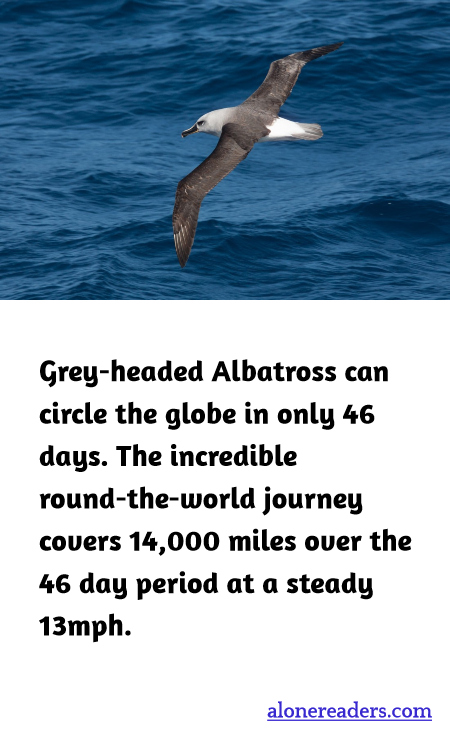
The Grey-headed Albatross, a remarkable species of seabird known for its expansive wingspan and striking appearance, has an equally impressive ability to travel vast distances across the globe. This bird is capable of circling the entire planet in just 46 days, a feat that spans about 14,000 miles. During this journey, the Grey-headed Albatross maintains a consistent speed of around 13 miles per hour, showcasing not only its endurance but also its navigational precision.
These albatrosses, which predominantly reside in the Southern Ocean, embark on these extensive flights primarily in search of food. Their diet mainly consists of squid, fish, and krill, which are more abundant in certain regions at different times of the year. The ability to travel such distances is crucial for the survival of the species, allowing them to exploit food resources that are seasonally available over a vast geographical area.
The Grey-headed Albatross utilizes the wind patterns over the ocean to assist in its long-distance travel. By riding on wind currents, these birds are able to conserve energy, gliding for hours without flapping their wings. This efficient mode of travel is vital, especially given the sparse distribution of suitable feeding areas and the energy required for continuous flight.
However, the remarkable journey of the Grey-headed Albatross is not without its challenges. These birds face several threats, including climate change, which affects wind patterns and ocean temperatures, thereby impacting the availability of prey. Additionally, longline fishing poses a significant risk, often leading to accidental bycatch. Conservation efforts are in place to mitigate these threats through measures like altering fishing practices to prevent bycatch and establishing marine protected areas.
Despite these challenges, the Grey-headed Albatross remains a symbol of the wonders of natural endurance and navigational skill. Its ability to traverse the globe is not only a testament to its incredible adaptability but also a compelling reason for intensified efforts to preserve its habitat and ensure the species' survival for future generations to marvel at and study.
