More About This Card
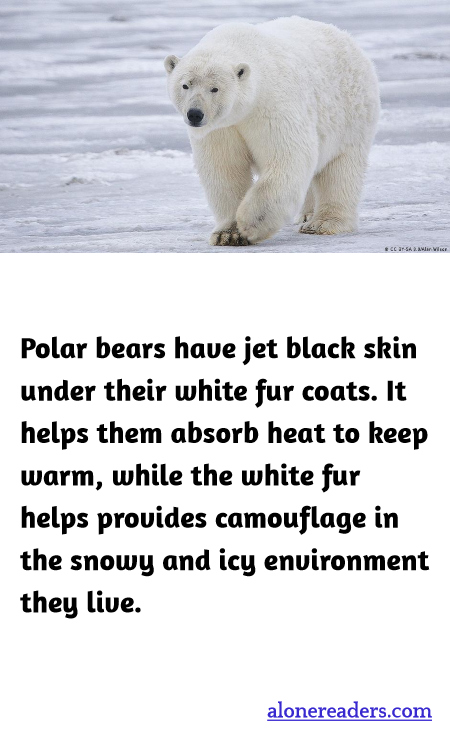
Polar bears, the majestic creatures of the Arctic, are not only known for their impressive size and hunting skills, but also for their unique adaptations to the harsh climate they inhabit. One of the most interesting features of these bears is their black skin, hidden beneath a deceptive coat of white fur. This adaptation plays a crucial role in their survival in the frigid temperatures where they live.
The black skin of a polar bear is an evolutionary trait that helps them soak up heat from the sun. Despite the extreme cold of the Arctic, the sun does shine, and when it does, polar bears can use their dark skin to their advantage. Black absorbs more heat than any other color, and this helps the bears maintain their body temperature, conserving energy that is crucial for survival in an environment where food can often be scarce.
The fur of the polar bear, although appearing white, is actually translucent and hollow. Each strand reflects visible light, giving the bear its white coloration that blends seamlessly with the icy and snowy surroundings. This camouflage is vital for hunting seals, which are the primary source of food for polar bears. The fur also traps the heat absorbed by the skin and minimizes its loss to the cold air. Additionally, the fur is water-repellent, an essential feature for an animal that spends a significant amount of time in and out of freezing water.
The combination of black skin and translucent fur is a remarkable adaptation that illustrates the complex ways in which animals evolve traits that optimize their chances of survival in specific environments. Polar bears are not just surviving in the Arctic; they are perfectly designed for it. This camouflage also underscores the bears' dependence on sea ice, which is crucial not just for hunting but also for mating, traveling, and occasionally denning.
As climate change continues to reduce the amount of sea ice in the Arctic, polar bears are becoming increasingly vulnerable. The loss of their natural habitat not only makes food sources scarce but also forces them into closer proximity with humans, leading to more conflicts. The survival of polar bears is tightly linked to the health of the Arctic ecosystem, making their conservation an important focus for scientists and environmentalists worldwide.
Understanding and sharing knowledge about the unique features of animals like polar bears is crucial for their conservation. By appreciating how finely tuned their adaptations are to their environment, we can better understand the impacts of environmental changes and the urgent need for strategies to mitigate them.