More About This Card
The distinctive smell of a skunk is one of the most recognizable and pungent odors in the animal kingdom. Known for their unique defense mechanism, skunks spray an oily liquid to deter predators, which is produced by glands located near their tails. This liquid contains sulfur-based compounds known as thiols, which create a smell that is not only strong but also difficult to remove.
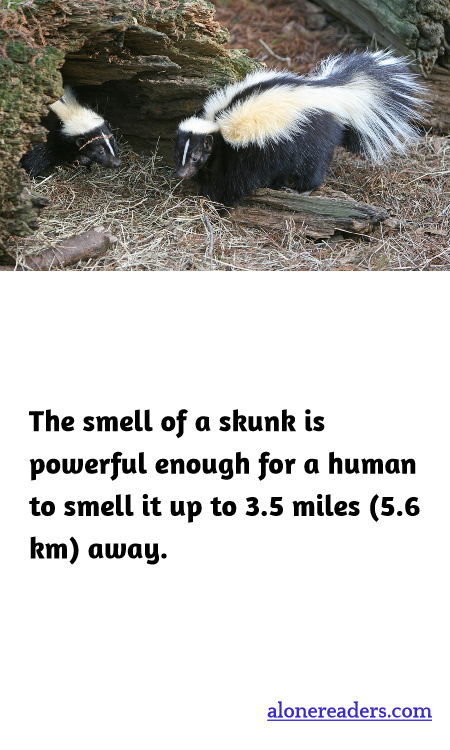
The potency of this odor is so intense that humans can detect it from up to 3.5 miles away under the right wind and weather conditions. This incredible range is an evolutionary advantage for the skunk, serving as a powerful deterrent against potential threats. The smell alerts predators and humans alike from a considerable distance, ensuring the skunk's safety by preventing encounters before they happen.
Interestingly, the effectiveness of the skunk's spray doesn't just lie in its strong odor but also in its clinginess. The oily nature of the spray makes it stick to whatever it comes into contact with, prolonging the scent and the associated discomfort. This persistence is why the smell of skunk spray is notoriously difficult to eliminate from pets, clothes, and even vehicles that come into contact with it.
In addition to its defensive role, the skunk’s ability to emit such a powerful odor also plays a part in communication among skunks, particularly in mating season. Despite the unpleasantness of the scent to humans and predators, it serves as a crucial survival tool for skunks, demonstrating nature’s ability to adapt and evolve mechanisms that ensure the continuation of species in the wild. Thus, while the skunk's smell might be an unwelcome encounter for many, it is a remarkable example of the complexities and intricacies of animal behavior and evolutionary adaptation.