More About This Card
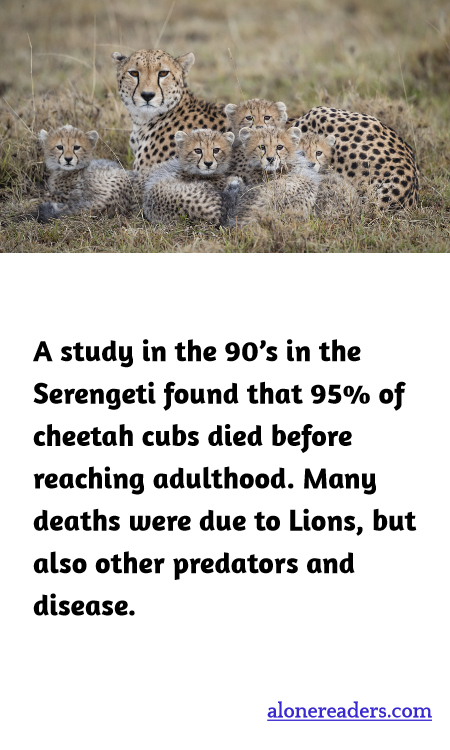
In the expansive and untamed landscapes of the Serengeti, the plight of the cheetah cub is a stark reminder of the brutal reality faced by wildlife in this iconic ecosystem. During the 1990s, a revealing study shed light on the unusually high mortality rates of cheetah cubs, with a staggering 95% not surviving to adulthood. This alarming statistic is not just a number but a reflection of the harsh challenges these animals face from birth.
Cheetahs, known for their incredible speed and grace, are at a distinct disadvantage when it comes to protecting their young. The study found that a significant number of cheetah cub deaths were caused by lions, who, as top predators, dominate the food chain and frequently eliminate potential competitors. The practice of infanticide among lions—killing cubs that are not their offspring—directly impacts the survival rates of cheetah cubs, as lion populations overlap with those of the cheetahs in parts of the Serengeti.
However, lions are not the only threat to cheetah cubs. Other large predators such as hyenas and leopards also contribute to the mortality rates, either through direct predation or by competition for food resources. In addition, disease presents a significant challenge, compounded by the cheetah's genetic homogeneity which may make their populations more vulnerable to outbreaks affecting multiple individuals.
The interaction between these factors is a complex web of ecological dynamics where survival is anything but guaranteed. The study from the 90s has subsequently prompted various conservation initiatives aimed at protecting cheetahs, particularly focusing on areas where their natural habitat intersects with high densities of other predators. Strategies such as habitat restoration, anti-poaching efforts, and the establishment of wildlife corridors are employed to mitigate some of the risks.
Conservationists are also working on community education programs to help local populations understand the importance of preserving such iconic species. By reducing human-wildlife conflict and increasing awareness, there is hope to improve the survival rates of cheetah cubs. Nevertheless, the battle is ongoing and the continued research and monitoring of these populations are crucial to ensure that the cheetah, with its remarkable speed and beauty, remains a part of our natural world and not just a memory.