More About This Card
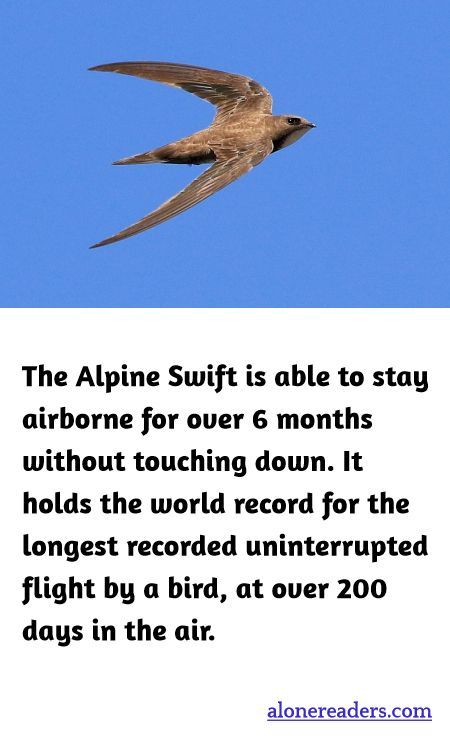
The Alpine Swift, a remarkable bird species known for its impressive flying abilities, showcases one of nature's most extraordinary feats of endurance. These birds, medium-sized compared to other swifts, have a distinctive appearance with their long, slender wings and forked tails, which are perfectly adapted to life in the skies. The ability of the Alpine Swift to remain airborne for over six months without landing was first documented through a groundbreaking study utilizing lightweight tracking devices. These devices revealed that the birds can sustain continuous flight for over 200 days, traversing thousands of kilometers during their migratory journeys.
This phenomenal capability is not just about endurance but also highlights the bird's adaptation to an aerial lifestyle. During these extended flights, Alpine Swifts engage in various activities while still airborne, including feeding and possibly even sleeping. They feed on a diet of aerial plankton, which includes insects and small arachnids caught on the wing. This sustenance allows them to maintain energy without the need for landing to forage, unlike many other bird species.
The Alpine Swift's flight endurance record is not only a testament to its evolutionary success but also to the fascinating adaptations of migratory birds. The physiological mechanisms supporting such long flights involve incredibly efficient metabolism and muscle work, as well as an ability to recover while flying. Moreover, it is believed that these birds can manage micro-sleep episodes during flight, although the specific mechanisms and patterns of such sleep remain areas active research.
The ability of the Alpine Swift to remain in the air for such prolonged periods challenges existing notions about bird biology and physiology, providing valuable insights into the broader understanding of animal migration and behavior. As researchers continue to study these and other migratory species, further secrets of their long-distance travel and survival strategies are likely to emerge, widening our appreciation of these remarkable avian capabilities. Indeed, the Alpine Swift’s record-setting flights underscore the complexity and wonder of the natural world, reminding us of the intricate and resilient designs shaped by millions of years of evolution.