More About This Card
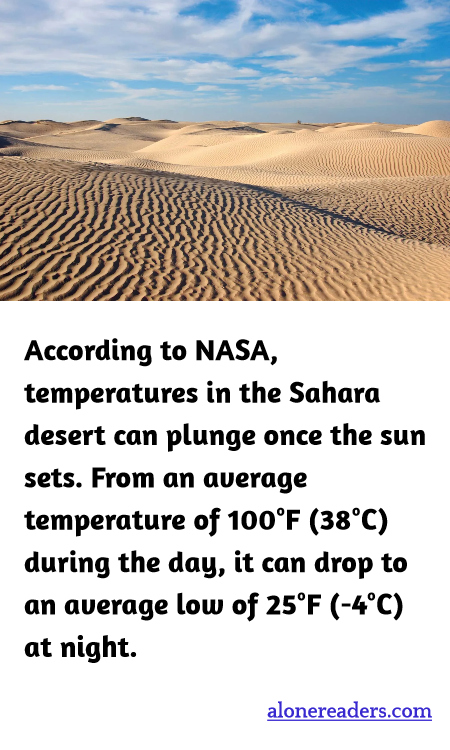
The Sahara Desert, often synonymous with scorching heat and sprawling sand dunes, undergoes a dramatic transformation as the sun sets. Contrary to the daytime imagery of relentless sun and soaring temperatures, nighttime in the Sahara presents a starkly different environment. According to NASA, temperatures in the desert can plummet dramatically once the sun goes down, showcasing the desert's extreme temperature variability.
During the day, temperatures in the Sahara are fiercely hot, commonly reaching 100°F (38°C). This intense heat is primarily due to the desert's sandy and rocky landscape, which absorbs and retains high levels of solar radiation. The arid conditions and minimal cloud cover allow for unrestrained sunlight to heat the surface. However, these same conditions contribute to the desert's rapid cooling after sunset. With little to no vegetation and moisture to retain the day's heat, and the clear skies facilitating rapid loss of heat back into the atmosphere, the temperature can drop to an average low of about 25°F (-4°C) at night.
This drastic daily temperature swing affects not only the desert's climate but also the biodiversity and the lifestyle of the inhabitants of the region. Flora and fauna in the Sahara have adapted uniquely to cope with the extreme temperature variations. Many animals are nocturnal, coming out at night to feed and perform other activities when the environment is less hostile. Human inhabitants, too, have traditionally adapted their activities, traveling or working during cooler hours and seeking shelter during the peak heat.
Understanding and studying these temperature shifts is crucial, not only for ecological reasons but also for better comprehension of desert climates in the context of global weather patterns and climate change. Scientists continue to monitor these environments to gather data that could provide insights into how similar arid regions around the world might react to changing global temperatures. The severe temperature fluctuations in the Sahara—a place of both extreme heat and unexpected cold—highlight the diverse and dynamic nature of Earth's climates, reminding us of the complex interactions between the Earth's surface and the atmosphere.