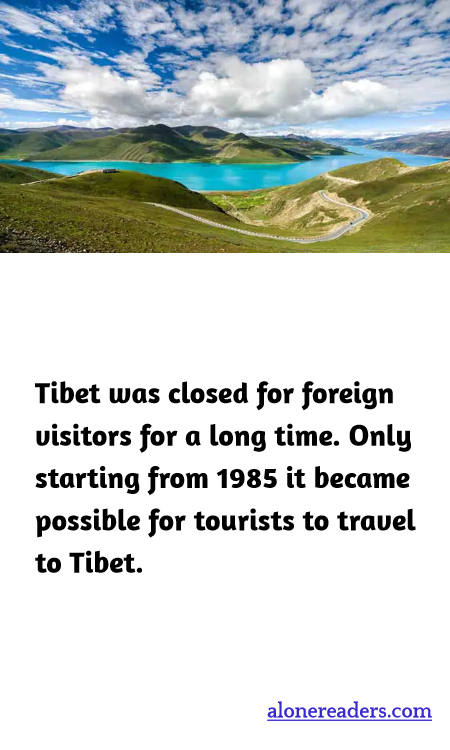
More About This Card
Tibet, often referred to as the "Roof of the World" due to its staggering altitudes, has long intrigued and attracted visitors with its mystical allure, rich history, and unique culture. However, for many years, this remote region was largely closed off to foreign visitors. It wasn't until 1985 that Tibet began opening its doors to tourists, which marked a significant shift in its accessibility and international relations.
The closure was primarily due to political sensitivities and the delicate nature of the region's relationship with China, which claims Tibet as part of its territory. The Chinese government imposed strict regulations and travel bans, fearing that increased foreign presence might fuel pro-independence sentiments among the Tibetan population. As a result, Tibet remained shrouded in mystery, known only through the accounts of a few intrepid explorers and the Tibetan diaspora.
The decision to open Tibet to tourism in 1985 was a part of a broader policy aimed at boosting economic development and showcasing Tibet's rich cultural heritage to the world. This opening was carefully managed, with the establishment of the Tibet Tourism Bureau and strict controls on where foreigners could travel within the region. Initial tourist visits were typically organized through government-sanctioned tours, which included visits to major cultural landmarks such as the Potala Palace in Lhasa, the former residence of the Dalai Lama, and religiously significant sites like Jokhang Temple and Tashilhunpo Monastery.
The impact of tourism on Tibet has been profound. While it has led to increased economic benefits, including better infrastructure and increased global awareness of Tibetan culture and issues, it has also raised concerns. Critics argue that tourism has contributed to cultural dilution and environmental degradation in some areas. Moreover, the political oversight of tourism means that the image of Tibet presented to visitors is often carefully curated.
Despite these issues, the allure of Tibet remains undiminished for many travelers. The breathtaking landscapes of the Himalayas, the spiritual aura of its monastic rituals, and the resilience of its people continue to draw tourists from around the globe. For those who visit, the experience is often transformative, offering a glimpse into a way of life that persists in the face of rapid modernization and complex geopolitical challenges.
As Tibet continues to navigate the balance between opening up to the world and preserving its cultural identity, the story of its partial isolation and eventual reopening to foreign visitors remains a compelling chapter in the region's long and tumultuous history.