More About This Card
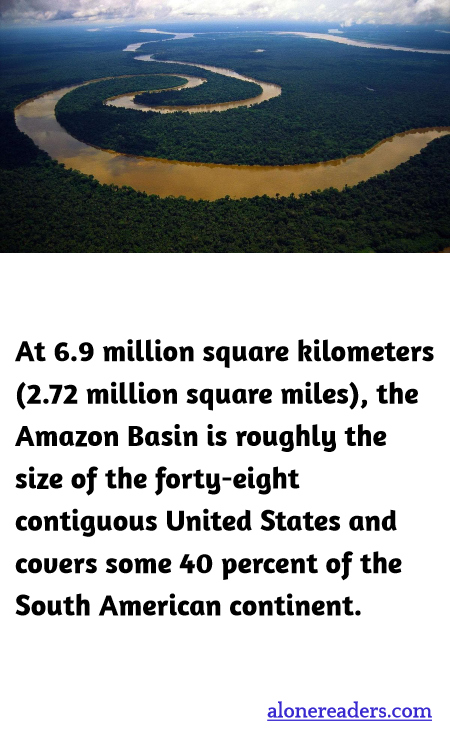
The Amazon Basin, covering an expansive 6.9 million square kilometers, is an immense region almost equivalent in size to the forty-eight contiguous United States. This area represents about 40 percent of South America, stretching across multiple countries including Brazil, Peru, Colombia, Venezuela, Ecuador, Bolivia, Guyana, Suriname, and French Guiana. This vast basin is chiefly dominated by the Amazon Rainforest, also known as Amazonia, which is the world's largest tropical rainforest.
Characterized by unparalleled biodiversity, the Amazon Basin is a crucial component of the global ecological system. It is home to approximately 10 percent of the known species on Earth, hosting millions of different organisms. This includes over 2,500 species of trees, 2,200 species of fishes, and hundreds of mammals and amphibians. Not only does it boast a rich variety of flora and fauna, but the Amazon also plays a critical role in regulating the Earth's atmosphere. It acts as a giant carbon sink, absorbing large amounts of carbon dioxide and thus mitigating the impact of climate change.
The Amazon River, which flows through this basin, is one of the key lifelines. It is by volume the largest river in the world. The river and its thousands of tributaries help distribute water and nutrients throughout the forest, supporting an intricate ecosystem that includes not only wildlife but also about 30 million people, including several indigenous communities. These inhabitants rely on the Amazon for food, water, medicine, and shelter.
However, significant threats hang over this spectacular region. Deforestation, primarily driven by logging, agriculture, and forest fires, poses the most significant risk. These activities not only lead to the loss of biodiversity but also impact the climate regulation functions of the forest. Studies show that the Amazon is nearing a tipping point, beyond which it cannot sustain its forest ecosystem and could irreversibly turn into a dry savannah, drastically affecting local and global weather patterns.
Preservation efforts are ongoing, with numerous local and international bodies working to protect and sustain the Amazon Basin. Sustainable management practices, environmental legislation, and international cooperation are seen as essential components in safeguarding this unparalleled natural resource. The future state of the Amazon Basin will significantly reflect on the global efforts put into its conservation, highlighting its importance not only to South America but to the environment worldwide.