More About This Card
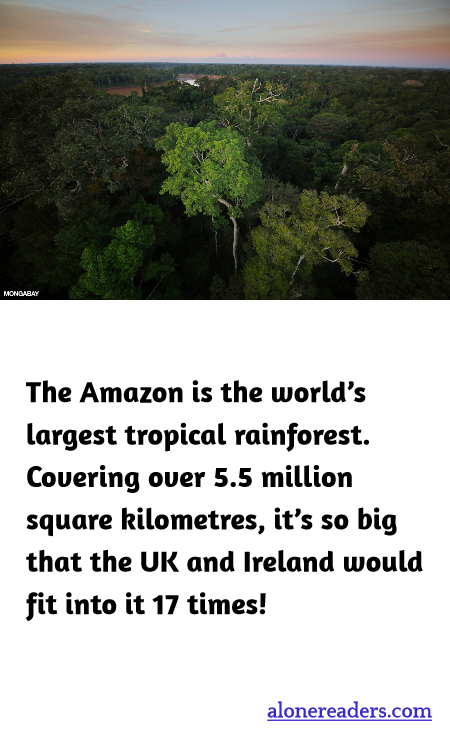
The Amazon Rainforest, often referred to as the lungs of the Earth, is an immense biome covering more than 5.5 million square kilometers across nine countries in South America, including Brazil, Peru, Colombia, Venezuela, Ecuador, Bolivia, Guyana, Suriname, and French Guiana. This ecological wonder is renowned for its biodiversity; it is home to about 10% of the known species on Earth, including a staggering number of plants, birds, and other wildlife. Some species found here are unique to the Amazon, making its conservation crucial for global biodiversity.
Within this vast forest, there are approximately 390 billion individual trees divided into 16,000 species. These trees play a vital role in regulating the world’s oxygen and carbon cycles. They absorb large amounts of carbon dioxide, a greenhouse gas that contributes to climate change, and produce oxygen which is essential for life on Earth. This process makes the Amazon a critical factor in fighting global warming.
However, the Amazon is not only significant for its environmental functions but also as a home to about 400-500 indigenous tribes including the Yanomami, the Kayapo, and the Ticuna, each with their own language, culture, and deep knowledge of the forest. These indigenous populations are vital to maintaining the biodiversity and ecological balance of the rainforest. Their understanding and traditional practices help preserve the forests and the myriad forms of life they sustain.
Despite its importance, the Amazon faces immense threats due to human activities. Deforestation, driven by logging, agricultural expansion, and mining, destroys vast areas of the forest. This not only threatens biodiversity but also impacts the climate regulating functions of the forest, releasing the carbon stored in the trees back into the atmosphere and exacerbating global warming. Recent years have seen an alarming increase in deforestation rates, partly fueled by political and economic factors.
Efforts to protect the Amazon are extensive and include international collaborations, protected areas, and initiatives led by non-governmental organizations and indigenous groups. There is a rising recognition of the need to implement sustainable practices that balance human needs with environmental protection. The future of the Amazon is a critical issue that the global community must continue to prioritize, ensuring it remains a thriving and vital cradle of biodiversity and a bulwark against climate change. Understanding and acting upon the need to preserve this vital world resource is crucial, not just for the well-being of those who depend on it directly but for the global community at large.