More About This Card
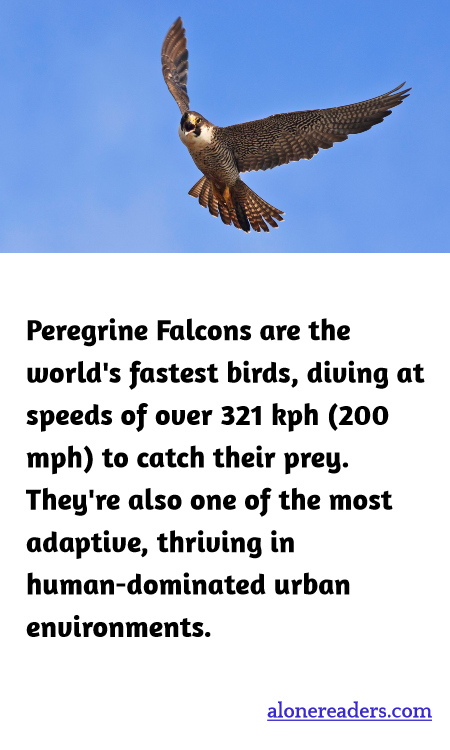
Peregrine Falcons, renowned for their astonishing speed, are notable as the world's fastest birds. Capable of diving at speeds exceeding 321 kilometers per hour (200 miles per hour), these raptors utilize this incredible velocity to strike prey in mid-air with breathtaking precision. Their hunting technique involves a steep dive, known as a stoop, during which they fold their wings close to their body to minimize air resistance, allowing for these mind-boggling speeds.
Equally impressive is the Peregrine Falcon's adaptability in a variety of habitats globally. Originally cliff dwellers, they have shown remarkable adaptability by thriving in urban landscapes. Cities mimic their natural cliffside habitats, with high-rise buildings providing perfect substitutes for steep cliffs for nesting. Urban environments also offer an abundance of prey such as pigeons and small birds, which helps support their dietary needs.
This adaptability has played a crucial role in the Peregrine Falcon's conservation status recovery. By the mid-20th century, their numbers had dramatically declined due to pesticide poisoning, particularly from DDT, leading to a ban on its use in several countries. Conservation efforts, including banning harmful pesticides, breeding programs in captivity, and urban nest site provisioning, have helped their populations rebound.
Today, the presence of Peregrine Falcons in urban settings serves as an encouraging example of wildlife resilience and adaptability. Their successful adaptation to city life not only aids their species' conservation but also enriches the biodiversity of urban areas, contributing to the ecological health of these environments. While challenges remain in ensuring their habitats, both natural and urban, remain viable and protected from human encroachment, the recovery of the Peregrine Falcon stands as a testament to the possibilities of coexistence between wildlife and urban development.