More About This Card
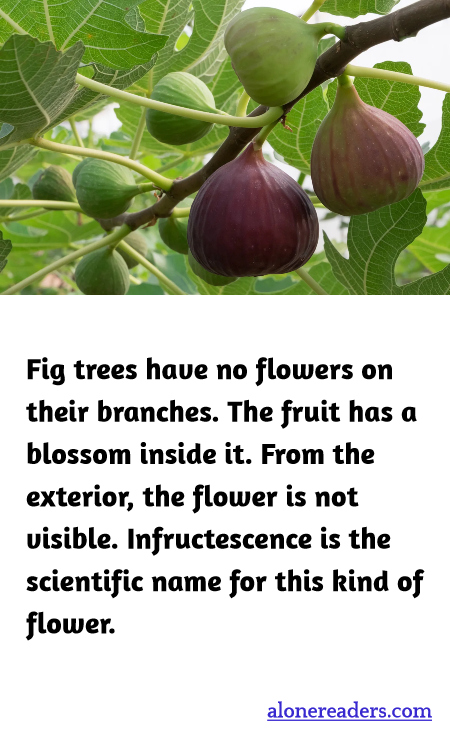
Fig trees, belonging to the genus Ficus, present a unique botanical twist in the way they bloom and bear fruit. Unlike most other trees, figs do not display their flowers on the branches. Instead, the flowers are hidden inside what we normally consider the fruit. This inward-blooming nature of fig flowers is a fascinating aspect of their biology, with the actual fruit being an inverted flower or an infructescence.
The fig's structure is scientifically referred to as a syconium, a fleshy container that holds hundreds of tiny female flowers internally. The process begins when the flowers inside the fig are pollinated, a task intricately linked to a specific type of wasp known as the fig wasp. In a clever twist of nature, the life cycle of these wasps is intertwined with that of the fig tree, highlighting a remarkable example of mutualism. The female wasp enters the fig through a tiny natural opening, losing her wings in the process and rendering her unable to leave. She lays her eggs inside some of the internal flowers, pollinating them in the process. The larvae hatch and develop inside, and male larvae mature, mate with female larvae, and then perish inside the fig. The newborn female wasps, now fertilized, collect pollen from these flowers and exit in search of new figs, continuing the reproductive cycle.
The fruit develops from this infructescence as the pollinated flowers grow seeds and the wall of the syconium becomes the fleshy fruit we eat. This complex reproductive process is essential for the production of seeds and the perpetuation of the species, with each fig species typically having its own unique fig wasp species that pollinates it.
The nutritional profile of figs is also noteworthy. Figs are rich in dietary fiber, essential minerals like magnesium, manganese, calcium, copper, potassium, and vitamins, particularly K and B6. Their health benefits span digestive health due to high fiber content, contributions to heart health through potassium, which helps control blood pressure, and natural sugar and soluble fiber that aid in regulating blood sugar levels. Through their unusual way of blooming and their nutritional benefits, figs hold a unique place in both the botanical and gastronomic worlds, providing both exceptional traits for scientists to study and delicious fruits for people to enjoy.