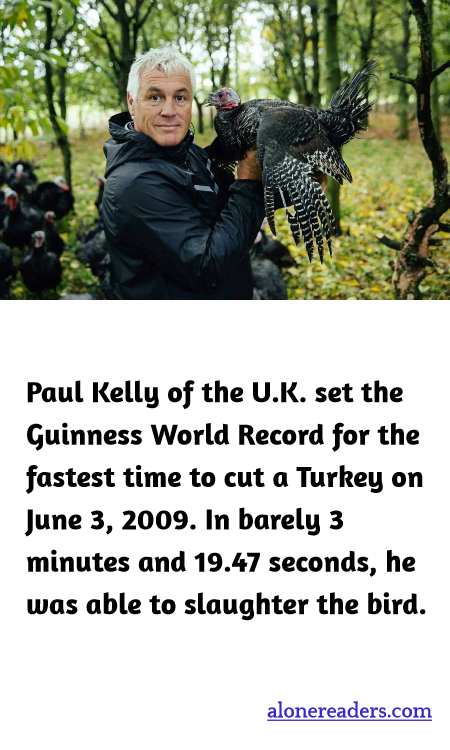
On June 3, 2009, Paul Kelly from the UK etched his name into the Guinness World Records by achieving a somewhat unusual feat – the fastest time to carve a turkey. Completing the task in just 3 minutes and 19.47 seconds, Kelly showcased a remarkable blend of speed and skill, slicing through the turkey with precision and efficiency that most ordinary folks could hardly dream of when prepping their holiday meals.
This record isn't just about speed. It speaks volumes about technique and mastery over the culinary arts. Carving is generally the final step in presenting a cooked turkey and it requires understanding the structure of the bird as much as it requires sharp tools and a steady hand. Properly carving a turkey ensures that each part of the bird – from the breast to the thigh – is neatly sliced and retains its juices, thus keeping the meat succulent and enjoyable.
The setting of such an unusual record also highlights the lighter side of record-setting, where not all records are about athletic feats or natural extremes. It taps into the everyday tasks, elevating them to a level of competitive craftsmanship. In Paul Kelly's case, his expertise didn't just make him a record holder; it likely places him in high esteem among culinary professionals and enthusiasts, illustrating that even the simplest tasks can be taken to the level of an art form.
However, the record isn't merely a personal triumph. It carries potential implications for professional kitchens by setting a benchmark for efficiency and skill, aspects that are crucial in high-pressure culinary environments. As whimsical as they may seem, records such as these contribute to the culinary world by encouraging chefs and carvers to hone their skills and perhaps, take turkey carving to new heights, whether in speed, finesse, or creativity.
On the surface, carving a turkey may not seem like the stuff of legends. Yet, in the hands of people like Paul Kelly, these everyday skills turn into spectacles that not only entertain but also inspire mastery and excellence.
