More About This Card
Turkeys are fascinating creatures, not only because of their importance in American culture during Thanksgiving but also due to their unique physiological features. One of the most intriguing abilities of a turkey is its capacity to change colors. This color change is not as dramatic as in chameleons, but it is noticeable and significant in displaying their emotional state and physical health.
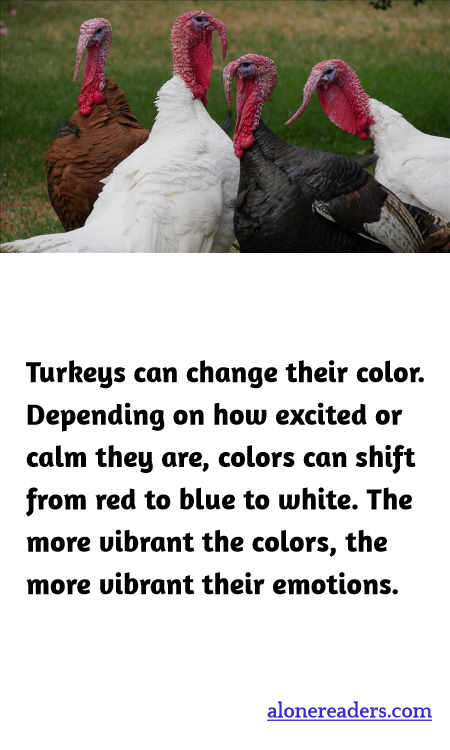
The skin on a turkey’s head and neck features a fascinating phenomenon where it can shift across a spectrum of hues from reds to blues to whites. These color shifts are influenced primarily by the turkey's emotional state. When a turkey is calm and relaxed, its skin tends to appear blue. This blue shade indicates a peaceful demeanor. In contrast, when a turkey is agitated, stressed, or trying to assert dominance, its skin turns a bright red color. This serves as a signal to other turkeys and creatures about its emotional agitation.
Additionally, during the mating season, male turkeys (also known as toms) exhibit more vibrant colors to attract females. This is a critical period when color change becomes particularly prominent. The brighter and more intense the colors, the more likely a male will attract a mate. The whiter shades appear less frequently but can signal fear or sickness, serving as an alert that the turkey might not be in the best health or is experiencing high levels of stress.
This color-changing ability is linked to blood vessels under the turkey's skin which contract or expand causing these shifts in hues. The physiological underpinnings involve the nervous system and hormonal responses, which dictate these color changes in response to external stimuli or internal emotional states.
Understanding this feature of turkeys adds an interesting layer to how we view these birds. It breaks the monotonous image often associated with turkeys, presenting them as complex creatures with advanced interaction abilities. Observing turkeys and their color changes can provide deeper insights into their wellbeing and social status within their groups, showcasing the nuanced and vibrant lives of these often underestimated birds.