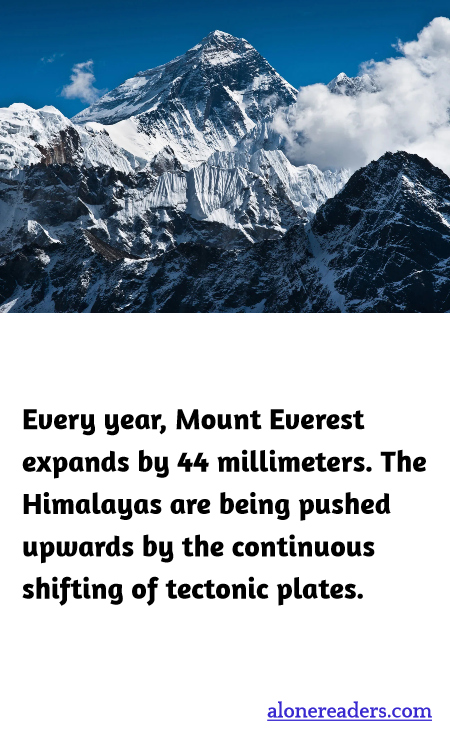
Mount Everest, the highest peak on Earth, is not as static as it might appear. Standing at over 29,000 feet, this colossal mountain is actually growing approximately 44 millimeters (about 1.7 inches) each year. This growth is due to the relentless movements of Earth's tectonic plates, specifically the collision between the Indian Plate and the Eurasian Plate. These two gigantic slabs of the earth’s crust began colliding millions of years ago, pushing the land upwards, an event that resulted in the formation of the Himalayan mountain range, which continues to this day.
The Indian Plate is moving north at about 45 millimeters per year towards the Eurasian Plate, which moves only about 21 millimeters per year. This ongoing convergence forces the material between them to rise, not just creating mountains, but continually pushing them skywards. The process, known as orogeny, involves a series of geological activities including folding, faulting, and volcanic features, that contribute to the frequent reshaping of the landscape.
This natural mountain-building process is punctuated by occasional earthquakes that can redefine elevations and contours of mountainous regions significantly, in a matter of moments. Mount Everest itself reached its officially recognized height of 29,032 feet after a re-measurement in 2020 that considered both tectonic movement and the most accurate survey technology available.
Interestingly, the growth of these mountains is not only a matter of geological interest but also poses challenges for mountaineers, geologists, and environmentalists. As the height of the Himalayas increases, so do the hazards of climbing them—avalanches and unexpected weather changes become more frequent. Additionally, the melting glaciers in the Himalayas due to global warming could pose further risks, potentially leading to increased flood risks downstream.
Thus, Mount Everest is more than just a static monument of nature’s majesty; it is an active, dynamic force continuously shaped by the earth’s fundamental geological processes. Its growth serves as a testament to the ongoing geological dynamism of our planet.
