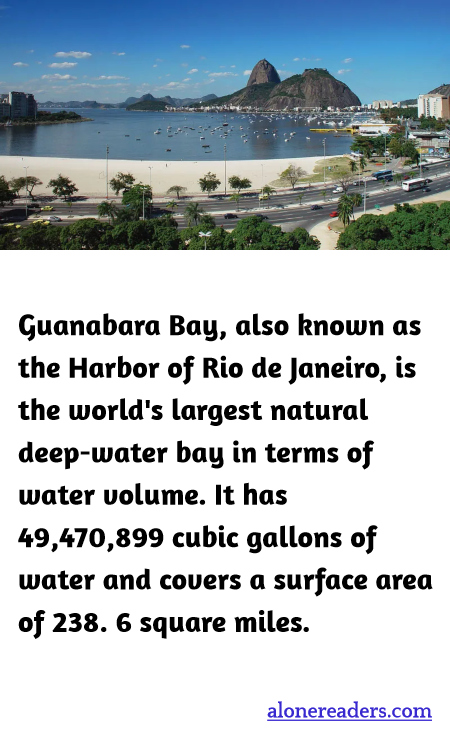
Guanabara Bay, also famously known as the Harbor of Rio de Janeiro, stands as one of the marvels of natural geography in Brazil and is significant for being the world's largest natural deep-water bay based on water volume. It holds a staggering 49,470,899 cubic gallons of water and spans a vast surface area of approximately 238.6 square miles. This vast body of water is not only a crucial geographic landmark but also plays a pivotal role in the socio-economic framework of Rio de Janeiro.
The bay's vastness and strategic location have made it an essential gateway for maritime activities throughout history. It has served as a major port and continues to be a central hub for both local fishermen and international shipping, which underscores its economic importance to the area. However, the bay is not just pivotal for economic reasons; it is also a hotspot for biodiversity. The surrounding mangroves and the rich marine ecosystem within the bay support a wide array of species, some of which are endemic to the region.
However, Guanabara Bay faces significant environmental threats due to urbanization and industrialization. Pollution has been a longstanding issue, with the waters suffering from the influx of sewage and industrial waste. This has had severe implications for both marine life and the health of the local population who rely on the bay for their livelihoods. Efforts have been made to clean and preserve this natural wonder, with various environmental groups pushing for stricter regulations and cleanup operations.
The bay is also a cultural icon, offering picturesque views that encapsulate the vibrancy and spirit of Rio de Janeiro. It is a popular destination for tourists who come to marvel at its scenic beauty and take part in various recreational activities such as boating, fishing, and water sports. The iconic Sugarloaf Mountain, which flanks the bay, provides a panoramic vista of this sprawling water body and is one of the most photographed locations in Brazil.
In conclusion, Guanabara Bay is a natural treasure with its vast expanse and deep waters. It is an anchor for both the ecological balance and the economic activities in Rio de Janeiro. However, preserving its beauty and vitality for future generations remains a significant challenge, requiring ongoing commitment and effective environmental stewardship. The continued relevance and vibrancy of Guanabara Bay will depend on the actions taken to mitigate human impact and preserve its natural and cultural legacy.
