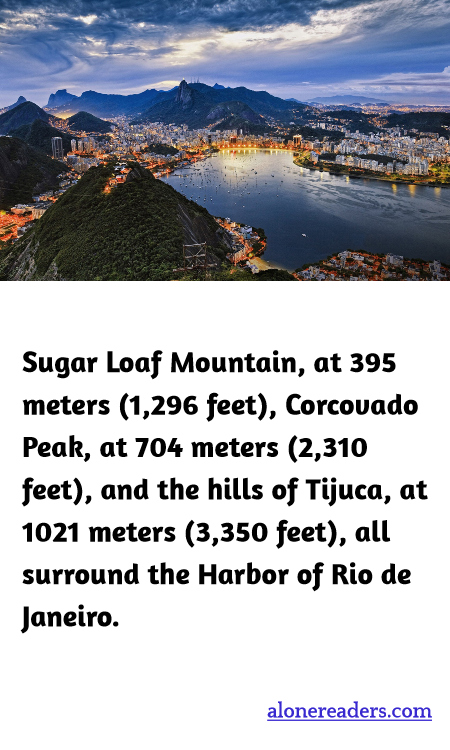
The Harbor of Rio de Janeiro, a world-renowned natural wonder, is dramatically flanked by a trio of majestic mountains, each adding its unique contour to the city’s skyline. Sugar Loaf Mountain, standing at 395 meters (1,296 feet), is perhaps the most iconic of these. Positioned at the mouth of Guanabara Bay, its peak offers a panoramic viewing platform famous for breathtaking vistas of the bustling city and its surrounding sandy beaches. Its distinct, rounded shape resembling a loaf of sugar, which is how it earned its name, has been a symbol of Rio de Janeiro since the city's infancy.
Further inland and towering above its famous neighbor, Corcovado Peak reaches a height of 704 meters (2,310 feet). It is internationally celebrated for its monumental statue of Christ the Redeemer, a cultural icon of both the city and Brazil, and one of the New Seven Wonders of the World. The statue's embracing arms stretch 28 meters (92 feet) across, symbolizing peace and welcome to the millions who visit this site each year. Corcovado offers perhaps even more impressive views than Sugar Loaf, with lush forests of the Tijuca National Park sprawling below and a wider panorama of the city’s vast urban areas.
The Tijuca hills, rising to 1021 meters (3,350 feet), host the largest urban rainforest in the world, the Tijuca National Park. This mountainous backdrop is not only vital for the recreational aspects it serves, enclosing hiking paths, waterfalls, and scenic picnic spots, but it is also crucial for the ecological balance, providing a green lung that helps to freshen the air of Rio and protect its many waterways. The peaks of Tijuca stand as natural sentinels, guarding the city and its harbor against the encroaching urban sprawl, and form a key part of Rio’s efforts in preserving its stunning natural heritage amidst urban development.
Together, these natural landmarks encapsulate the enchanting appeal of Rio de Janeiro, offering not only superb natural beauty but also a haven of biodiversity and a beacon of cultural significance. They shape the physical and cultural landscape of the city, fostering a unique interaction between nature and urbanity that charms visitors and sustains locals alike. This harmonious coexistence of natural peaks and vibrant city life makes the Harbor of Rio de Janeiro a truly captivating sight that continues to draw admirers from around the globe.
