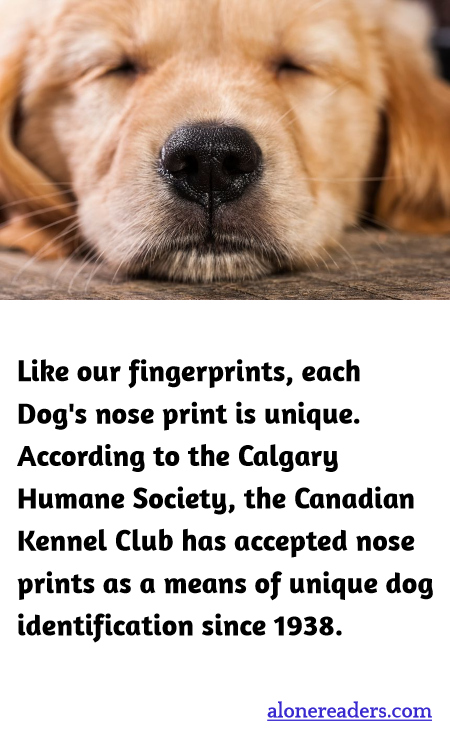
Dogs, much like humans, have their own unique identifiers. While humans have fingerprints, each dog has a distinct nose print. The texture of lines and patterns on a dog's nose is as individual as a human fingerprint. This characteristic has made nose prints a valuable tool in identifying dogs.
The uniqueness of nose prints was recognized as early as 1938 when the Canadian Kennel Club began using them for dog identification. This method has proven to be an effective alternative to more invasive identification techniques, such as tattooing or microchipping, although it is utilized less frequently. It involves taking an ink impression of a dog’s nose and using it to create a record that can be used for future verification.
The Calgary Humane Society endorses the use of nose prints for identification purposes as well. This method is simple and humane, causing no discomfort to the dog. The process is akin to creating a fingerprint for a human; a harmless ink or food coloring is applied to the dog's nose, and then the dog is encouraged to press its nose onto a piece of paper, thus transferring the pattern.
This identification method not only aids in recovering lost pets but also helps in maintaining records for breeding purposes, establishing pet ownership in cases of disputes, and even in forensic investigations involving pets. However, despite these advantages, the practice of using nose prints as a standard identification method is not as widespread as microchipping, which provides a more universally accepted and easily accessible form of identification. Nonetheless, the use of nose prints remains a fascinating example of biological uniqueness in animals, mirroring much of what is found in human biometric data.
In adopting such a method, dog owners can participate in an identification system that further confirms the bond between them and their pets, celebrating the distinctiveness of their beloved dogs. Moreover, as interest in comprehensive pet identification methods grows, technologies for capturing and registering nose prints might become more advanced and widespread, potentially making this old-school technique popular once more.
