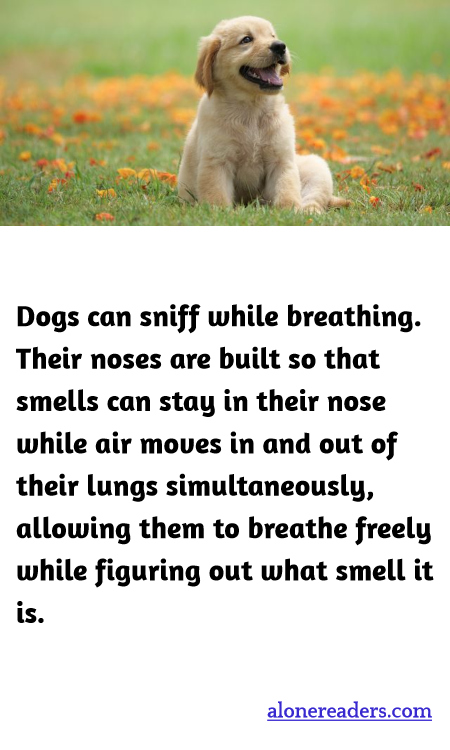
Dogs possess an incredible olfactory system that allows them to sniff continuously while breathing, a feat that is highly unique and advantageous for various scent-oriented tasks. This distinctive ability is facilitated by a specialized structure in their noses. When dogs inhale, air enters the nostrils and gets split into two different pathways—one for olfaction and the other for respiration. This segregation is achieved through a fold of tissue inside the nasal cavity.
The part of the air destined for olfaction moves to a region densely packed with scent receptors. In dogs, this area is remarkably expansive, containing up to 300 million olfactory receptors, compared to about six million in humans. This allows them to detect and analyze scents even at very low concentrations. After reaching the olfactory receptors, the smell is processed and interpreted before the air continues to the lungs for respiration.
What makes this system even more fascinating is that while dogs exhale, the design of their nostrils allows them to push out the air through slits in the sides of their noses. This mechanism ensures that the exiting air does not disturb the incoming air that is carrying new scents. Furthermore, the exhaled air is expelled in a way that helps to draw in more scent-bearing air, enhancing their ability to pick up further smells. This continuous cycle of sniffing without interruption allows dogs to track scents for long periods, which is why they are so effective in roles such as search and rescue operations, drug detection, and tracking wildlife.
The capacity of dogs to sniff while breathing not only demonstrates their physical adaptation but also represents their evolutionary advancement in hunting and survival techniques. Understanding this aspect of canine biology helps in training them effectively for various scent-related tasks and provides insights into the evolutionary pressures that shaped these remarkable animals. The dog's nose is thus a prime example of natural adaptation at its finest, highlighting a sophisticated intersection between anatomy and function that supports their survival and enhances their interactions with the environment.
