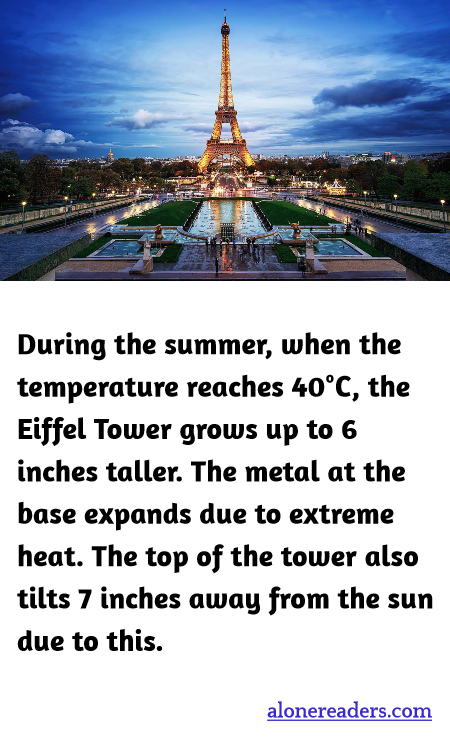
As temperatures soar to 40°C during summer, the iconic Eiffel Tower in Paris experiences an incredible yet little-known transformation—it grows taller by up to 6 inches (about 15 centimeters). This fascinating phenomenon is due to the expansion of the tower's iron structure as it heats up. Iron, like most metals, expands when heated and contracts when cooled. Given the massive amount of metal making up the tower, even a small expansion in each beam adds up to a noticeable increase in height.
The science behind this is rooted in the behavior of particles in solids. As they gain energy from heat, the particles vibrate more vigorously, requiring more space to move around, which results in the expansion of the entire structure. The Eiffel Tower, made predominantly of wrought iron, comprises 18,038 pieces intricately linked together with 2,500,000 rivets, with each piece contributing minutely to the overall expansion.
Not only does the tower grow taller, but it also tilts away from the sun. The top of the tower moves by up to 7 inches from its original position, tilting in the opposite direction of the sun's path due to asymmetric heating. This occurs because the sun heats one side more than the other, causing uneven expansion. Nevertheless, such movements are perfectly normal and are taken into account in the design of large structures, which often incorporate expansion joints and other features to accommodate them.
Even though these changes are temporary—reversing as the metal cools down in the evening—they serve as an interesting example of how engineering and natural forces interact. Remarkably, despite the fluctuations, these movements do not adversely affect the tower’s structural integrity or safety, thanks to careful planning and the inherent flexibility of its construction.
This dynamic ability of the Eiffel Tower not only underscores the brilliance behind its 1889 engineering but also demonstrates the living, breathing nature of large structures, adapting subtly to their environments. The Eiffel Tower, thus, continues to stand not only as a symbol of architectural beauty and historical significance but also as a testament to the enduring ingenuity of its creators.
