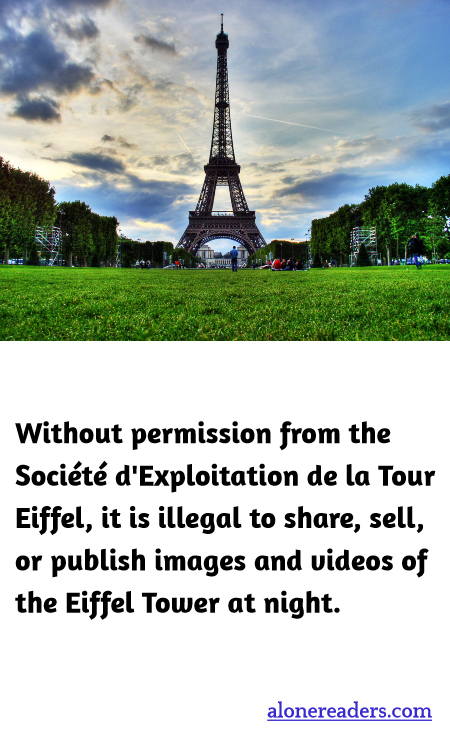
One of the most iconic landmarks in the world, the Eiffel Tower in Paris, not only draws millions of visitors each year but also serves as a popular subject for photographs and videos. However, many are unaware that while it is completely legal to take daytime shots of the tower, capturing its image at night can be subject to certain legal restrictions. The key issue here revolves around the artistic light display that illuminates the Eiffel Tower every evening.
The Eiffel Tower, completed in 1889, is in the public domain, meaning that during daytime, one can freely photograph or film it without any restrictions. However, the nightly illuminations, which include a sparkling light show added in 1985 to mark the tower's centennial, are copyrighted by the Société d'Exploitation de la Tour Eiffel (SETE). SETE oversees the operation of the tower and holds copyright to the artistic lighting installation. According to French copyright laws, any depiction of the lit-up tower during its nightly display requires prior permission from SETE.
This unique situation often surprises tourists and photographers, especially in our age of social media and instant photo sharing. Unauthorized publication, sale, or distribution of nighttime images of the tower can lead to legal issues. For personal use, like private photo albums or showing photos to friends, there's generally no concern. The complications arise when the images are used for commercial purposes, such as in advertisements, merchandise, or other forms of public distribution that could potentially generate revenue.
The illumination of the Eiffel Tower at night is classified as an artistic work, and like with any other copyrighted material, using images of it for commercial gain infringes on copyright laws unless permission has been secured. This policy ensures that the artistic integrity and commercial value of the illuminations are maintained, granting the creators and operators their rightful control over the usage of such images.
As visitors to the Eiffel Tower continue to capture their experiences, it remains crucial for anyone intending to use nighttime images of the tower commercially to be aware of these regulations and seek the necessary permissions. This respect for copyright not only adheres to legal standards but also supports the creators who contribute to showcasing the Eiffel Tower in such a compelling, enchanting light that captivates people around the world night after night.
