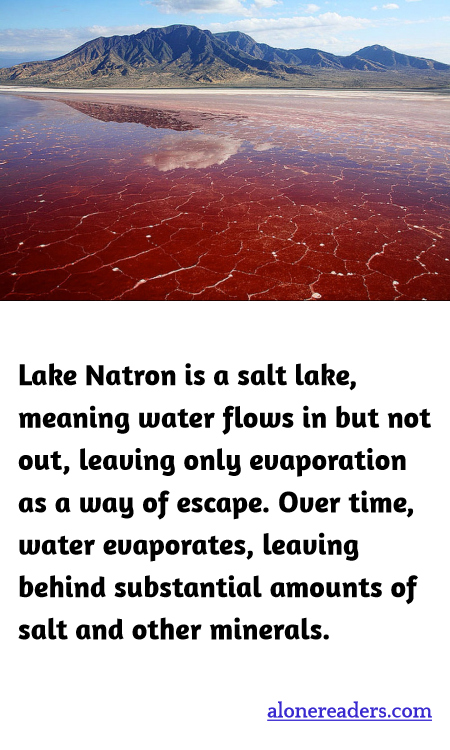
Lake Natron, situated in Northern Tanzania near the Kenyan border, is one of the world's most fascinating yet inhospitable lakes. Unlike most other bodies of water, Lake Natron is an alkaline or soda lake, characterized by its high concentrations of carbonate salts including sodium carbonate, sodium bicarbonate, and other minerals. This unique chemical composition has earned it a reputation for having hostile living conditions, often compared to that of an otherworldly environment.
The lake's water sources include mainly the Southern Ewaso Ng'iro River and lesser contributions from mineral-rich hot springs. These inputs introduce high volumes of minerals to the lake, but since Lake Natron has no outlet, the only method for water to leave is through evaporation. The intense African sun beats down on the water's surface, steadily reducing its volume and leaving behind an ever-increasing concentration of minerals. Over time, this evaporation process has resulted in the lake's alkalinity levels reaching a pH as high as 12 – comparable to that of ammonia.
This extreme alkalinity creates a forbidding environment where few species can survive. Nonetheless, Lake Natron is vital to the survival of one remarkable species: the lesser flamingo. The lake serves as one of the most important breeding sites for these birds in the world. Its isolated location and harsh conditions protect their nesting sites from most predators. The algae and bacteria thriving in its warm, alkaline waters create a rich source of food for the flamingos, tinging the lake with shades of pink and red.
Despite its seemingly inhospitable nature, Lake Natron is visually stunning. Its waters often appear bright red or deep orange due to the thriving organisms adapted to its harsh conditions. The surrounding landscape adds to this dramatic appearance, with the Ol Doinyo Lengai (Mountain of God) volcano - the world’s only active natrocarbonatite volcano - dominating the backdrop. Its eruptions emit carbonatite lava, which upon cooling contributes further to the mineral content of the waters.
The unique ecosystem of Lake Natron, coupled with its surreal visual appeal, makes it a valuable subject of study and interest not only for biologists and ecologists but also for photographers and travelers seeking unparalleled natural scenes. However, the future of Lake Natron faces uncertainties. Increasing pressures from human activities such as plans for hydroelectric power projects and the extraction of minerals pose significant threats to its fragile ecosystem and the species relying on it. Conservation efforts are crucial to preserving this natural wonder and its surrounding environment for future generations.
