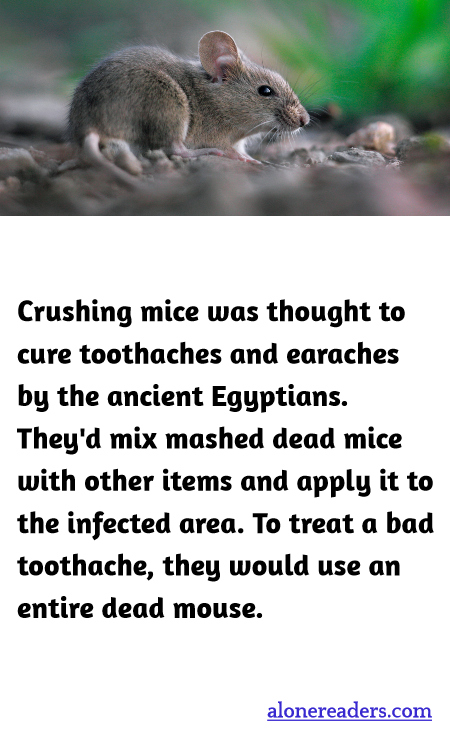
The medical practices of ancient cultures often seem bizarre by modern standards. In ancient Egypt, for instance, one particularly unsettling remedy involved the use of dead mice to cure ailments such as toothaches and earaches. The Egyptians believed in the healing properties of these small rodents, and their use in treatments provides a fascinating glimpse into the intersection of medicine, culture, and mysticism during that era.
For toothaches, it was not uncommon for an Egyptian to apply a mashed dead mouse directly to the painful area. This treatment could be enhanced by mixing the crushed remains with other substances, potentially herbs or clays, which they believed would increase the efficacy of the remedy. The choice to use mice may not have been purely superstition. Some researchers suggest that the Egyptians observed the regenerative capabilities of mice, particularly their rapid healing and prolific breeding, and thus concluded that they could confer these benefits to humans.
For earaches, the process was similar, involving a poultice that included mashed mouse as a key ingredient. This mixture was likely applied to the outside of the ear, and the Egyptians would have expected the purported healing properties of the mouse to alleviate the pain or infection.
While today we might find the use of dead animals in medical treatments repulsive or even alarming, these methods were part of a broader tradition of using what was readily available in the environment. Moreover, animal-based remedies were not unique to the Egyptians; many other ancient cultures used various animals and their parts for healing purposes. In a time devoid of modern medical science and technologies, these practices were often based on observations, experiments, and a bit of mystical thinking.
Despite the primitive nature of such treatments, examining them can be invaluable. They offer insight into how our ancestors understood the body and its ailments. Moreover, they remind us of the incredible strides humanity has made in the field of medicine, moving from crushed mice to advanced pharmaceuticals and sophisticated surgical techniques. Such historical medical practices underline not only human ingenuity and adaptability but also our ongoing quest to better understand and treat the physical ailments that afflict us.
