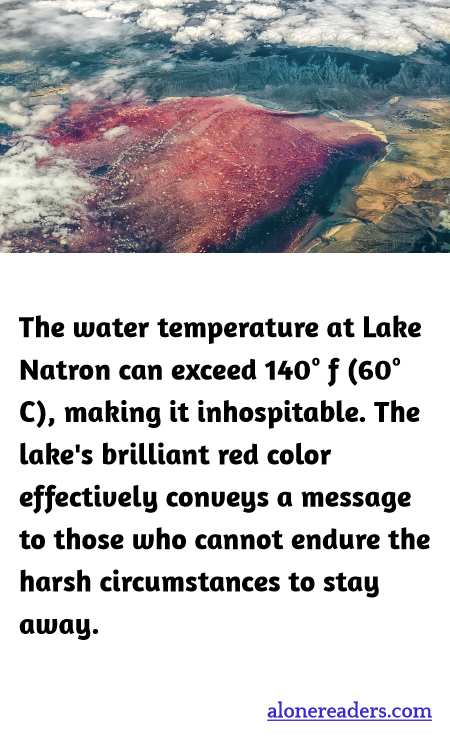
Lake Natron, located in Northern Tanzania, near the Kenyan border, is a starkly unique body of water. It stands as one of the most inhospitable environments on Earth. With water temperatures reaching up to 140°F (60°C), this lake presents extreme conditions where few organisms can survive. The high temperature is just one of the harsh aspects of Lake Natron. Another formidable characteristic is its alkalinity levels, with a pH as high as 10.5, similar to that of ammonia.
The striking red coloration of Lake Natron is another of its distinctive features. This vivid hue is due to the thriving presence of microorganisms that flourish in its salty water during evaporation processes. Cyanobacteria which are adapted to high pH levels produce red pigment, giving the lake its eerie, otherworldly glow. The color serves as a natural warning sign, hinting at the severe environmental conditions prevalent in the lake.
This harsh ecosystem uniquely supports a specific species: the alkaline-adapted Lesser Flamingo. Surprisingly, Lake Natron is one of the most important breeding sites for these birds. The hostile environment actually benefits the flamingos, as it deters predators and provides plentiful algae, their primary food source, which thrives in these conditions.
The lake is also surrounded by other geological wonders, including volcanoes like Ol Doinyo Lengai, known as "The Mountain of God" by the Maasai people. This volcano contributes to the lake’s harsh chemical environment by emitting cooler lava rich in sodium and potassium carbonates into the water basins, intensifying the extreme alkalinity.
Visually breathtaking yet deadly, Lake Natron captures a rare essence of nature’s paradoxes—its ability to foster life in the most punishing of habitats and its stark beauty that warns of its inherent dangers. While the environment is not conducive to human life or most wildlife, it underscores the adaptability and resilience of nature in the face of extremes.
