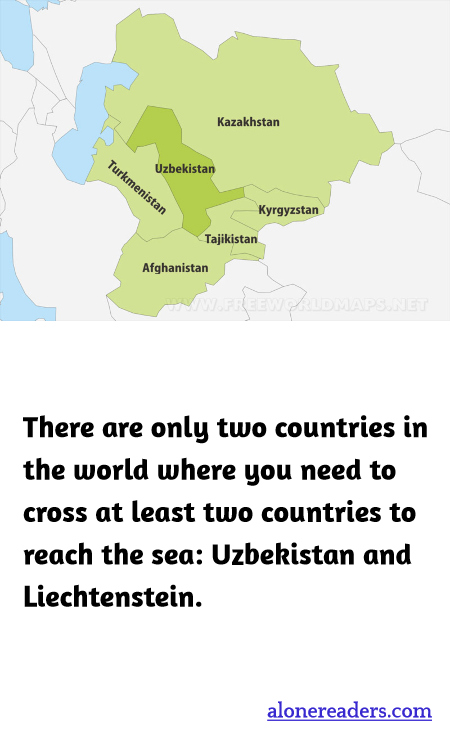
Uzbekistan and Liechtenstein share a unique geographical feature: they are the only two countries in the world where you must cross at least two other countries to gain access to the ocean. This landlocked status deeply influences their economic, political, and cultural contexts.
Uzbekistan, once a key player on the ancient Silk Road, is doubly landlocked. It is surrounded by five countries: Kazakhstan, Kyrgyzstan, Tajikistan, Afghanistan, and Turkmenistan. Accessing the sea requires passage through at least two of these neighboring nations. This geographical positioning has significant implications for Uzbekistan’s trade and transportation. The country has had to negotiate transit rights and develop extensive overland transport routes to connect with global markets. Nevertheless, it harnesses its rich cultural heritage and strategic location to foster regional cooperation and boost its transit economy.
Liechtenstein, nestled between Switzerland and Austria, faces a similar predicament. It is the only other doubly landlocked country in the world. Despite its small size, Liechtenstein has developed a highly prosperous, high-tech economy, heavily integrated with and dependent on its neighbors. The country’s economic success is largely based on its innovative industries and services, and it benefits from close ties with the larger European market. However, its landlocked nature means it must rely on its neighbors' infrastructure for access to maritime trade routes, making it susceptible to changes in their economic policies and transit fees.
The challenges faced by Uzbekistan and Liechtenistan due to their doubly landlocked statuses are unique in the world. Both nations have had to navigate complex international relations, invest in robust transport and communication networks, and, importantly, maintain stable and favorable relations with their neighbors. This dynamic has engendered a mix of cooperation and dependency, influencing both regional politics and international economic interactions.
Yet, both countries demonstrate that being landlocked, even doubly so, does not preclude economic success or strategic significance. Through innovative strategies and international partnerships, Uzbekistan and Liechtenstein manage not only to overcome their geographical limitations but also to carve out influential roles on the global stage. Their experiences highlight the importance of diplomacy, infrastructure, and strategic positioning in overcoming the challenges of geographical constraints.
