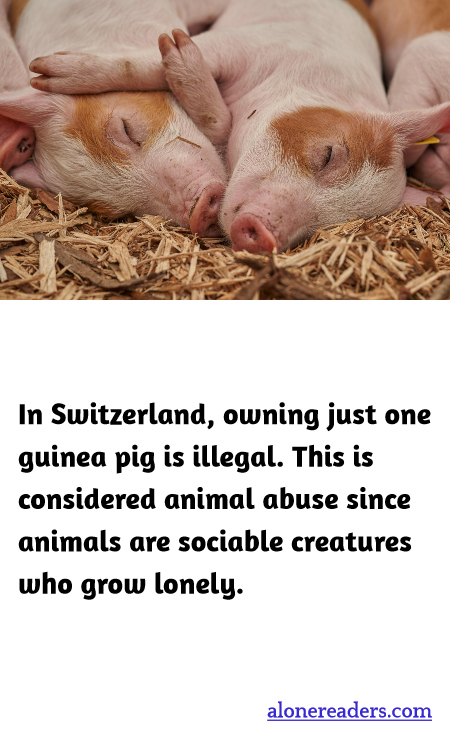
In Switzerland, famed for its picturesque landscapes and precise regulations, the law extends its reach to how people care for their pets, particularly guinea pigs. This European country has unique legislation surrounding the ownership of these small, sociable rodents. Under Swiss animal welfare laws, it is deemed illegal to own just a single guinea pig. This law stems from a broader understanding that guinea pigs are highly social creatures who thrive in the company of their own kind.
The rationale behind this legislation is rooted in the psychology and social needs of the guinea pigs themselves. These pets can suffer from loneliness if kept alone, which in turn can lead to behavioral and health issues. By requiring that they are kept in pairs or groups, the law ensures that these animals can enjoy a more natural, stimulating environment, which significantly contributes to their overall well-being.
This unique aspect of Swiss pet ownership laws highlights the country’s progressive stance on animal welfare, necessitating that the emotional and social needs of pets are taken seriously. For prospective guinea pig owners in Switzerland, this means committing to keeping at least two animals. Moreover, the law has spurred the growth of services and businesses aimed at helping pet owners comply with this requirement. For instance, there are 'rent-a-guinea pig' services, which provide companions to guinea pigs when one of a pair dies, ensuring the surviving pet won’t have to live alone while its owner searches for a new companion.
Such legislation not only raises awareness about the specific needs of different pet species but also prompts a broader reflection on how society views and treats animals. It sets a precedent that could potentially influence pet care standards internationally, promoting a deeper understanding of animal welfare and encouraging more empathetic and scientifically informed approaches to pet keeping. In sum, Switzerland's guinea pig law is a prime example of how legal frameworks can reflect a society's values towards the care and treatment of animals, setting a benchmark for the rest of the world to consider.
