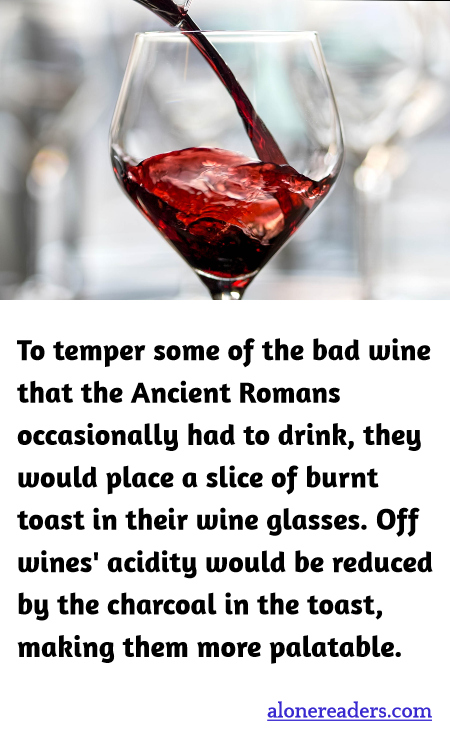
In the days of the Ancient Romans, wine was a staple of daily life, enjoyed by the elite and common folk alike. However, not all batches of wine were delectable, and occasionally, poor quality wine was inevitable due to variations in vintage, preservation methods, and storage conditions. To combat the sourness of subpar wine, the Romans ingeniously used a piece of burnt toast. This method played a crucial role in improving the drinkability of the wine.
The science behind this ancient remedy lies in the properties of charcoal, which is produced by burning toast. Charcoal is known for its ability to absorb impurities and neutralize odors and flavors. When the burnt toast was placed into the wine, the charcoal interacted with the wine’s acidity, taming its sharp and often unpleasant taste. This not only made the wine more palatable but also suggests an early understanding of chemical interactions with activated carbon, a technique still revered today in different forms of filtration and purification.
This practice is a testament to the resourcefulness of the Romans in enhancing their gastronomic experience. It also reflects an early appreciation for the sensory aspects of food and drink, showcasing a sophisticated approach to dining that went beyond mere sustenance. Interestingly, while modern methods of correcting the taste of wine do not involve burnt toast, the concept of decanting, or exposing wine to air to improve its flavor, echoes the Roman pursuit of refining their wine. Fundamentally, the Roman use of toast was a precursor to understanding more about the chemistry of food and flavors, an area that continues to evolve even in current culinary science.
Today, the story of Romans using burnt toast to improve their wine adds a charming anecdote to the narrative of culinary history, illustrating not just a historical fact but a universal quest for improving the human experience through food and drink. This ingenious little trick of theirs embodies the anticipation and craftsmanship that are hall and parcel of the culinary arts, bridging the gap between ancient and modern gastronomy. Whether for practical purposes or enhancing enjoyment, the evolution of culinary techniques continues to define, and redefine, the boundaries of taste and flavor in our lives.
