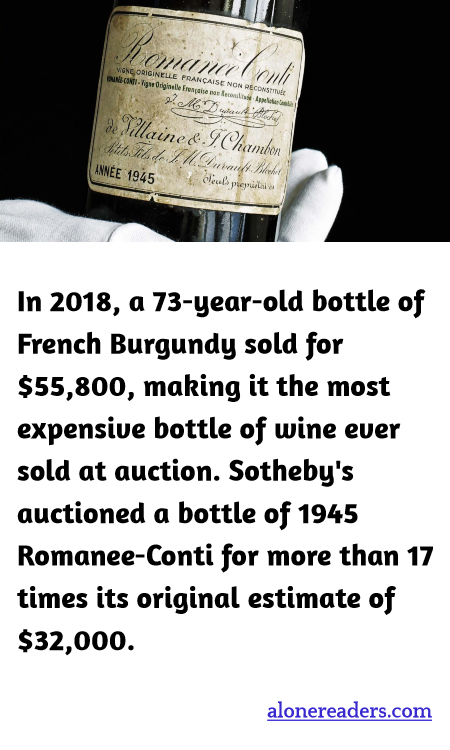
The sale of a 73-year-old bottle of French Burgundy in 2018 set a new record in the world of wine auctions, captivating oenophiles and collectors alike. The bottle of 1945 Romanee-Conti, auctioned by Sotheby’s, fetched an astounding $558,000, far surpassing its estimated price of $32,000. Such an extraordinary figure speaks volumes about the allure and historical significance of Romanee-Conti, arguably one of the most revered and sought-after wines globally.
Romanee-Conti, which comes from the vineyard of the same name in the Burgundy region of France, has long been celebrated for its exclusivity and exceptional quality. The 1945 vintage is particularly notable—not only was it produced at the end of World War II, marking a significant period in European history, but it also came from one of the last vintages before the vineyard’s vines were uprooted for replanting. This scarcity, coupled with the vineyard's storied reputation and the wine's age, contributed vastly to its value.
This record-breaking auction highlights the vibrant, sometimes frenetic, market for rare and vintage wines, which continues to attract a global cadre of wealthy collectors and enthusiasts. Such sales not only reflect the economic capacity of buyers to invest in these liquid treasures but also underscore the cultural and historical prestige associated with vintage wines. They are not merely consumed; they are collected, cherished, and celebrated as works of agricultural and historical art.
The astronomical price fetched by the 1945 Romanee-Conti also had a ripple effect, signaling to the market that the ceiling for what collectors are willing to pay for exceptional wines is far higher than previously imagined. It feeds into a broader narrative of luxury and exclusivity that surrounds the rarest vintages, making each auction a spectacle in its own right. Collectors not only desire the unique taste and storied provenance of wines like Romanee-Conti but also the distinctive distinction of owning such a rare artifact. This auction, therefore, was not merely a transaction but a significant event in the landscape of wine collecting, one likely to influence future valuations and collectors' appetites.
