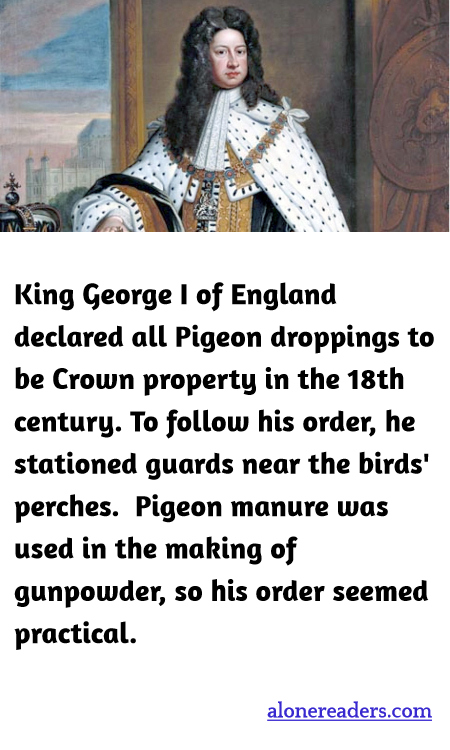
In the 18th century, King George I of England issued a somewhat unusual decree that classified all pigeon droppings as Crown property. This royal edict wasn't born out of a capricious desire to control pigeon waste but was rooted in a practical military need. During this period, pigeon manure was highly valued for its significant content of saltpeter—an essential ingredient in the manufacturing of gunpowder.
To ensure the royal directive was effectively enforced, guards were stationed near popular pigeon roosting sites. These guards were tasked with overseeing the collection of pigeon droppings to prevent theft or unauthorised use of this strategic resource. The manure was then processed to extract saltpeter, and the resulting material was used to produce gunpowder for the military.
The decision to monopolize pigeon manure highlights the innovative and somewhat unconventional methods governments of the time would employ to meet military needs. Furthermore, it underlines the broad scope of resources considered vital to national security. The edict also offers a glimpse into the early methods of resource conservation and state control over materials deemed of national importance. Control over such a mundane yet crucial resource ensured that England could maintain an adequate supply of gunpowder, which was of critical importance given the geopolitical landscape of the time, which often involved prolonged periods of warfare.
Ultimately, King George I's directive reflects the lengths to which a government would go to secure resources critical to the nation's defense and underscores the importance of seemingly trivial substances like pigeon droppings in the broader context of national security and military readiness.
