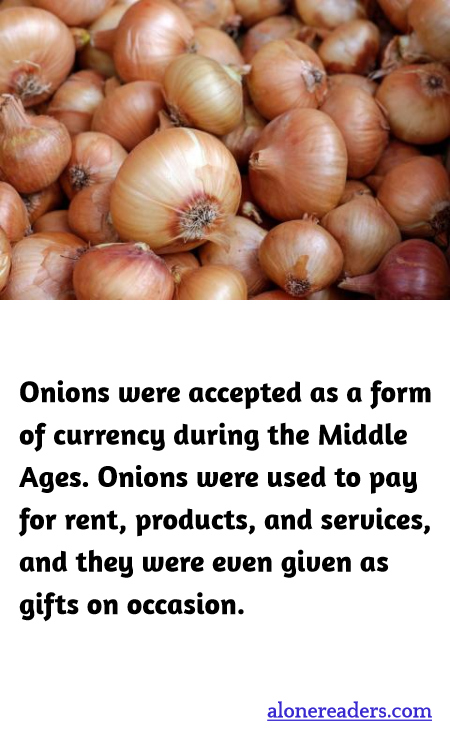
During the Middle Ages, onions held a value that extended far beyond their culinary utility. In a time when the economy was predominantly barter-based, onions emerged as an unexpectedly versatile form of currency. This pungent vegetable was not only a staple in the diet of the European populace, providing essential nutrients and flavor to the commonly bland medieval cuisine, but it also had several other uses that increased its worth.
The robust nature of onions made them ideal for use as a commodity. They were durable, easily transportable, and had a relatively long shelf life, which made them a practical choice for payment. Often, they were used in lieu of money to settle debts, pay for goods and services, and even cover rent. This was particularly useful in rural areas, where coins were sometimes scarce, and the economy relied more heavily on trade and barter systems.
In addition to their role as a makeshift currency, onions were prized for their medicinal properties. Medieval herbalists prescribed them for a range of ailments, from headaches and snake bites to hair loss. The antibacterial properties of onions were recognized, making them useful for preventing infections and aiding in the healing of wounds.
The value of onions was also recognized in social contexts. They were commonly given as gifts during festivals and were a conventional offering at weddings, where they were believed to bring good luck. This tradition underscores the cultural importance of onions during the era, symbolizing prosperity and protection.
Thus, the humble onion was more than just a culinary staple during the Middle Ages—it was a multifaceted commodity that served as an economic instrument, a medicinal remedy, and a symbol of good fortune. Its utility and symbolic importance made it one of the more curious yet critical pieces of the medieval economy. This historical perspective offers a fascinating glimpse into the adaptability and ingenuity of societies before modern monetary systems took hold, highlighting how even the simplest items can take on great significance in human society.
