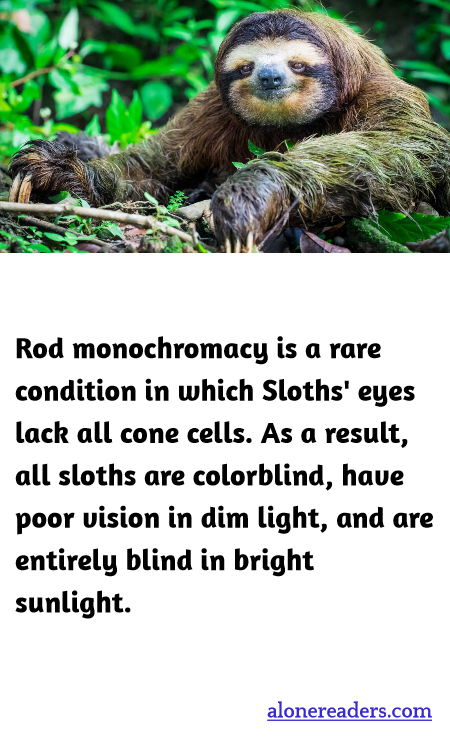
Rod monochromacy is a fascinating and rare visual condition primarily identified in sloths. By definition, this condition means that the eyes of sloths are composed exclusively of rod cells, completely lacking cone cells, which are vital for color vision. Cone cells not only contribute to color differentiation but also to visual clarity and detail in higher light levels. The absence of these cells in sloths provides them with a very distinct way of perceiving the world around them - entirely in gradients of gray rather than in color.
This visual setup heavily influences the sloth's lifestyle and behaviors. Being colorblind, sloths cannot distinguish between the lush greens and other colors of their rainforest habitat, which might seem like a disadvantage. However, this does not pose a significant problem in their daily navigation or survival. Instead, their vision is adapted to their slow-paced life amongst the dense foliage where sharp color vision is less critical.
Moreover, the predominance of rod cells means that sloths are naturally equipped to see relatively well in low-light conditions, a typical scenario in their densely canopied environments. This characteristic allows them to move and forage during dusk and dawn when the light is dim, aligning well with their primarily nocturnal activity patterns. However, the flip side to this adaptation is that sloths face challenges during bright daylight. The intense light can overwhelm their rod-only vision, effectively rendering them blind in such conditions. To cope, sloths often avoid activity during peak sunlight hours and remain within the darker, shaded areas of the forest canopy.
The evolutionary trajectory that led to sloths acquiring this unique form of monochromacy is likely tied to their ecological niche and the need for energy conservation. By reducing the metabolic demands that high-resolution, color vision typically requires, sloths conserve energy, which is crucial given their low-energy diet of leaves. This trade-off exemplifies how evolutionary paths can favor adaptations that are perfectly suited to an organism's specific environmental demands and lifestyle, albeit unusual from a human perspective.
In conclusion, rod monochromacy in sloths is a perfect example of how diverse and finely tuned animal adaptations are to their environments. Despite what might seem like a disadvantage, this visual condition has shaped the way sloths interact with their world, enabling them to thrive in their specific ecological niche. As with many aspects of the natural world, what at first appears to be a limitation can often reveal itself to be a beneficial adaptation to the unique challenges faced by a species.
