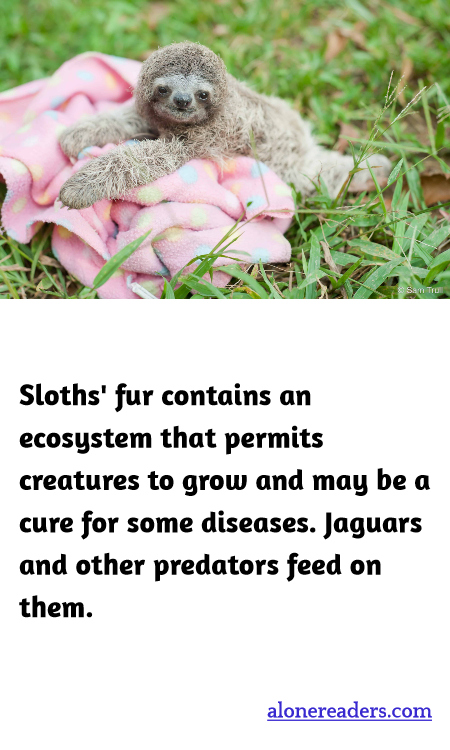
Sloths, those slow-moving inhabitants of Central and South American rainforests, are not just interesting for their languid lifestyle but also for the complex ecosystem they carry within their fur. The dense and coarse fur of sloths is a thriving habitat for various organisms, including algae, fungi, and a multitude of insects. Among these, the green algae are particularly notable as they give the sloth's fur a greenish tinge that helps camouflage them in the verdant canopy, serving as a vital defense mechanism against predators.
The algae that symbiotically live on sloth fur are not just passive riders; they engage in a mutually beneficial relationship with their hosts. The algae gain a safe place to grow and access to sunlight, while the sloth receives some camouflage in return. Intriguingly, recent scientific studies suggest that these algae, along with other microorganisms found in sloth fur, could have medicinal properties. The unique environment of the sloth’s fur, characterized by a low oxygen and high humidity habitat, forces the microorganisms to produce substances that could potentially fight against bacterial infections and even cancer cells. Research in this area could pave the way for the development of new antibiotics or anticancer agents.
However, despite their unhurried nature and the benefits their fur provides, sloths face significant threats from predators. Jaguars, harpy eagles, and large snakes are their most common natural foes. These predators can easily spot even the well-camouflaged sloth when it descends to the ground, an activity it undertakes primarily for defecation, approximately once a week. The slow movement of sloths makes them vulnerable, and their primary defense is their ability to stay hidden in the tree canopies.
Understanding the intricate balance of the sloth's ecosystem—both on their bodies and within their arboreal habitats—is essential for conservation efforts. Not only are sloths a key component of their ecosystem, but the potential medical benefits hidden in their fur underscore the importance of preserving these unique creatures and their environments. As scientific exploration continues, the sloth proves to be more than just a curiosity, possibly holding secrets beneficial to medical science and ecological conservation initiatives. The interconnections between species and their environments are vividly illustrated in the life of the sloth, reminding us of the complex web of life that sustains the planet.
