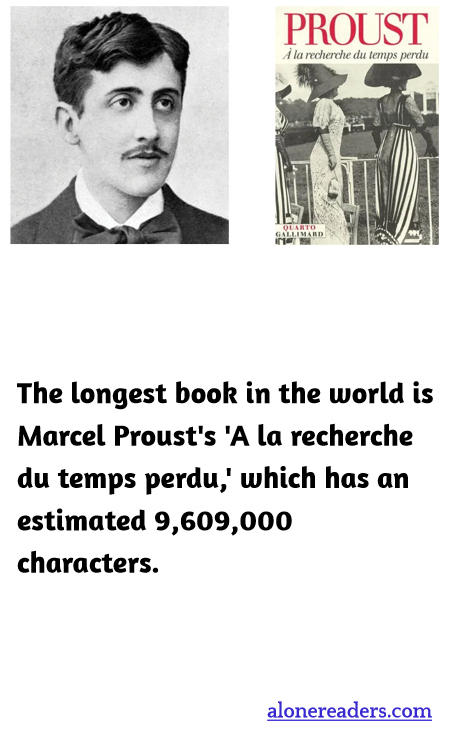
Marcel Proust's 'À la recherche du temps perdu' (In Search of Lost Time), also known as 'Remembrance of Things Past,' is often cited as the longest book in the world. This monumental novel, composed of seven volumes, spans an estimated 9,609,000 characters. First published in French between 1913 and 1927, Proust's masterpiece is celebrated not only for its length but also for its profound exploration of memory, time, and human experience.
The narrative weaves through the life of its narrator, Charles Swann, and a myriad of other characters, traversing aristocratic salons of Paris to the quiet, reflective corners of rural France. It reflects Proust's insights into the fleeting nature of time and the fleeting impressions of people and places that shape our lives. The work is revered for its intricate sentence structure, which often flows over several lines, and its ability to evoke vivid imagery and intense emotions through its meticulous and often poetic descriptions.
Proust's deep-dive into the minutiae of his characters' lives and his philosophical musings on subjective reality and the passage of time has made 'In Search of Lost Time' a cornerstone of 20th-century literature. The volume and depth of the novel allow it to cover a broad spectrum of human emotions and social commentary, making it as much a psychological exploration as it is a literary one.
Critically acclaimed and internationally recognized, Proust's work remains a fundamental text in the world of literary studies. It challenges readers with its complex themes and narrative style but offers immense rewards to those who navigate its labyrinthine passages, making 'In Search of Lost Time' a quintessential giant in the canon of Western literature. This novel’s legendarily daunting length encapsulates an author's relentless pursuit of art's potential to mimic and represent the flow of time and the inherent beauty of the search for meaning within it.
