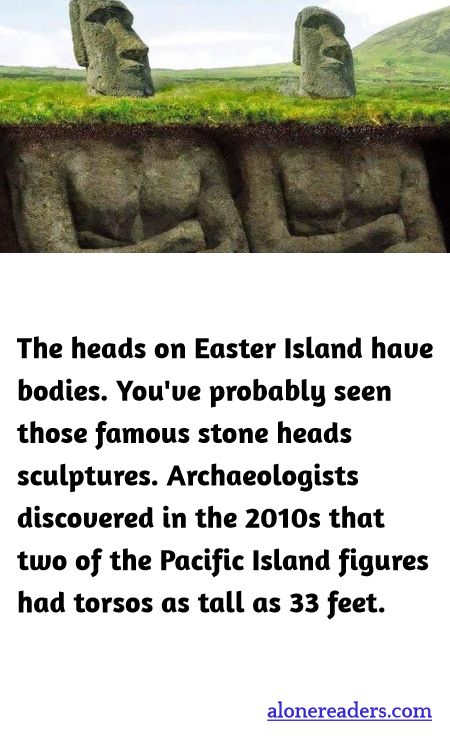
Easter Island, known locally as Rapa Nui, has long mystified historians and visitors with its imposing moai statues, which are monumental heads crafted from volcanic rock. While these iconic figures are famously recognized primarily for their oversized heads, archaeological efforts in the 2010s revealed a surprising and significant detail: many of these heads actually have bodies that extend deep beneath the surface of the ground.
These discoveries were made as archaeologists excavated around some of the statues, finding that the figures were complete bodies, with torsos that could stretch as high as 33 feet. This find not only deepened the intrigue surrounding these ancient sculptures but also provided new insights into the capabilities and customs of the Rapa Nui people who crafted them between the years 1400 and 1650.
The extended bodies are intricately carved with detailed designs, which are believed to represent the traditional tattoos and attire of the Rapa Nui culture. This suggests that the statues were not merely artistic expressions but also held significant cultural and ceremonial importance. The entire figure—the head and the body—are thought to represent the ancestors of the Rapa Nui people, serving as a connection between the living and their lineage, imbuing the landscape with a profound historical and spiritual presence.
This deeper understanding of the moai seems to support theories that the statues were centrally involved in the ancestor worship of the Rapa Nui people. The fact that these massive sculptures were transported and erected across the island also underscores the advanced engineering skills and societal organization of the island's early inhabitants.
However, despite the advancements in understanding, many questions remain about how the Rapa Nui people managed the feat of carving, transporting, and erecting these enormous stone figures using the limited resources available on their remote island. The uncovering of the moai bodies has spurred further research and interest in Easter Island, suggesting that many more secrets lie buried beneath its soils, waiting to add more pieces to the complex puzzle of Pacific history. The continued study and preservation of these statues offer not only a deeper knowledge of Rapa Nui’s past but also a reminder of the ingenuity and spirit of its people.
