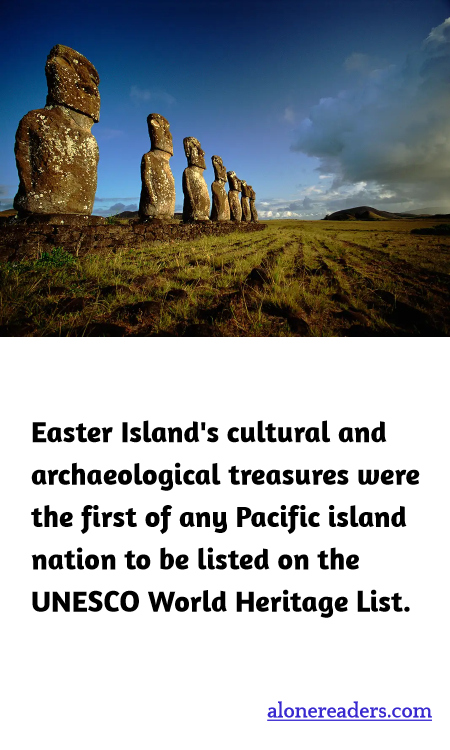
Easter Island, known locally as Rapa Nui, situated in the southeastern Pacific Ocean, is a remote volcanic island famed for its archaeological treasures. This island is particularly renowned for its mysterious moai statues, which are monolithic human figures carved by the Rapa Nui people between 1250 and 1500 CE. These statues, sometimes towering over 10 meters high and weighing over 80 tons, have long intrigued and mystified scholars and tourists alike with their imposing size and the ambiguity surrounding their purpose and construction.
The cultural significance of these statues, along with the island's other archaeological sites, earned Easter Island a place on the UNESCO World Heritage List in 1995, making it the first among Pacific island nations to receive such recognition. This prestigious status helps protect and preserve the island’s unique cultural heritage and ensures that the remarkable historical narratives and the knowledge of ancient Polynesian navigators and artisans do not fade into obscurity.
Being listed as a UNESCO World Heritage Site has increased global awareness and interest in Easter Island, attracting archaeologists and cultural preservationists dedicated to studying and conserving its artifacts and structures. Furthermore, the designation has encouraged sustainable tourism to the island, which is essential for the local economy but needs careful management to ensure the protection of the island's delicate environment and archaeological sites.
The island's inclusion in the World Heritage List not only celebrates its past achievements but also serves as a reminder of the ongoing need to understand and preserve such a unique part of human history. As we continue to unravel the mysteries of Rapa Nui, we gain insights not only into a unique island culture but also into the broader saga of human civilization and ingenuity. Hence, Easter Island serves as both a guardian of the past and a beacon for future cultural preservation efforts across the globe.
