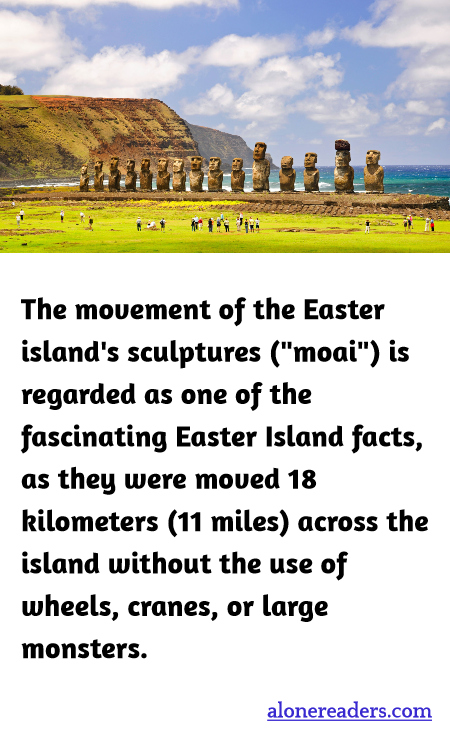
The enigmatic moai statues of Easter Island are among its most captivating features, presenting a significant mystery in historical transportation and engineering. These colossal monoliths, carved by the Rapa Nui people, were transported up to 18 kilometers (11 miles) across the island. The feat is particularly remarkable considering the Polynesians did not have access to modern technology or even the wheel.
Archaeologists and historians have been piecing together the possible methods used by the Rapa Nui to move these giant statues. Weighing up to 82 tons and standing as tall as 10 meters, the moai were most likely moved from the main quarry at Rano Raraku volcano to various platforms around the island's perimeter. Theories about how these statues were moved include the use of log rollers, sleds, and ropes. Some suggest that the moai were rocked forward using a technique called parbuckling.
Another intriguing theory is that the moai were "walked" to their destinations. This theory is supported by experiments showing that, with ropes tied around the statues, teams of workers could rock them back and forth, mimicking a walking motion, allowing the moai to advance in a controlled and efficient manner. This method would have required an extraordinary level of coordination and community effort, attributes that were likely integral to Rapa Nui culture.
The social and religious significance of the moai is also crucial. These statues weren't merely artistic or architectural feats; they represented the ancestors of the Rapa Nui people, believed to bestow mana (spiritual power) upon the living. This cultural importance may have motivated the islanders to develop and refine innovative methods for moving the statues.
The movement of the moai remains one of the most fascinating aspects of Easter Island, highlighting the ingenuity and determination of its early inhabitants. It not only underscores the technological achievements of a pre-industrial society but also reflects the deep spiritual and social interconnections within the Rapa Nui community. These statues, now symbols of cultural ingenuity, continue to intrigue and inspire researchers and visitors alike, embodying the mysterious allure that has made Easter Island a subject of global fascination.
