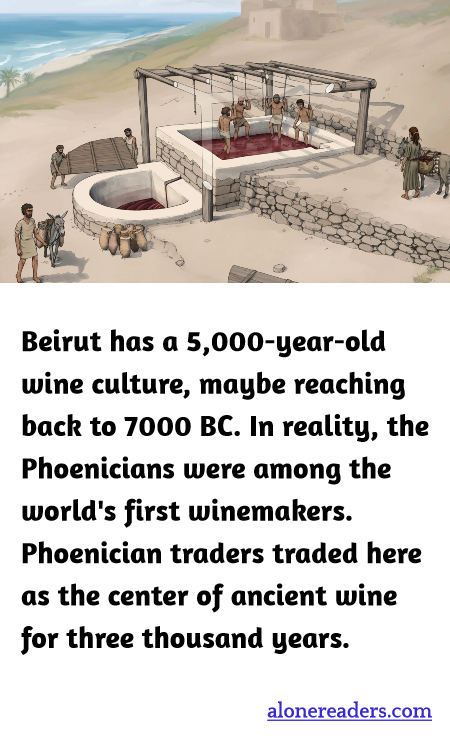
Beirut's contributions to the world of wine might be traced back as far as 7,000 BC, making it a pivotal player in the global wine culture with a history spanning almost 5,000 years. This illustrious past deeply intertwines with the legacies of the Phoenicians, who are often heralded as some of the world's first winemakers. These ancient entrepreneurs did not merely master the art of viticulture; they were also astute traders, spreading the allure of their wines far and wide.
The Phoenicians, hailing from the coastal regions of modern-day Lebanon, were strategically located to influence and propel the wine trade across the Mediterranean basin. Their skills in navigating seafaring trade routes allowed them to export their wine across vast distances, reaching markets that other contemporaneous cultures could not. As a result, wine from the Beirut area was not just a local staple but a global phenomenon, gracing tables from Rome to Carthage.
This robust network not only fueled the economy but also played a significant role in the cultural exchange between disparate civilizations during that era. Wine, often used in religious and ceremonial contexts, became a medium through which various cultures intersected and influenced each other. The exchange of viticultural techniques and grape varieties led to innovations in winemaking that are still appreciated in the industry today.
Additionally, the archaeological remains in and around Beirut further testify to its central role in ancient winemaking. Excavations have unearthed vessels that were used for the fermentation and storage of wine, along with remnants of ancient presses used to extract juice from grapes. These findings underscore the sophistication of early Lebanese viticulture and its significance to the local economy and culture.
Today, Beirut continues to honor its rich viticultural heritage. Local wineries blend traditional techniques with modern technology, producing wines that are highly regarded both locally and internationally. These contemporary wineries not only pay homage to their Phoenician roots but also innovate within the field, ensuring that Beirut remains a key player on the world’s wine stage, just as it has for thousands of years. This enduring legacy is a point of national pride and a cherished cultural heritage that continues to influence global winemaking practices.
