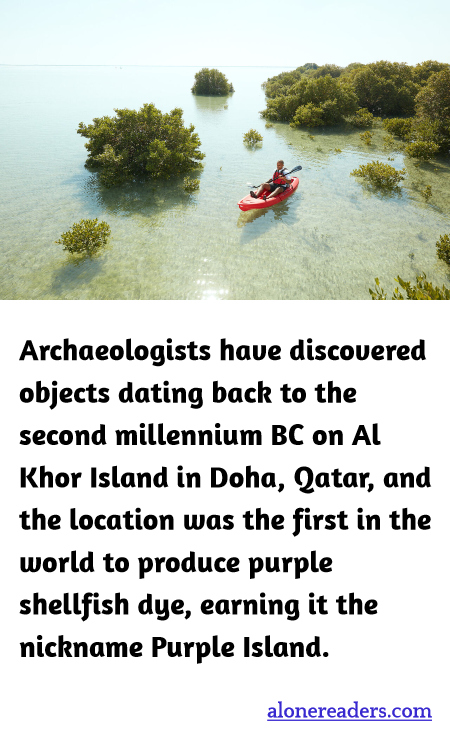
In an intriguing archaeological find, researchers have unearthed objects on Al Khor Island, also known as Purple Island, in Doha, Qatar, that date back to the second millennium BC. This island has garnered attention not only for its historical artifacts but also for its unique contribution to ancient industry. Purple Island is recognized as the first known location in the world to produce the famed purple shellfish dye, a highly-valued substance that played a significant role in ancient trade and culture.
The production of purple dye from shellfish, specifically from the Murex brandaris, was a painstaking process that involved collecting vast quantities of these marine gastropods, from which only minuscule amounts of dye could be extracted. The rarity and intensity of the color made it particularly desirable in ancient times, symbolizing power and wealth, and was often reserved for royalty and high-ranking officials. It is fascinating to note that the dye’s prestige was such that it was mentioned in ancient texts, including the Bible, where it is famously known to have been used in garments of the high priests and royalty.
The recent discoveries on Al Khor Island include not just remnants related to the dye production but also various pottery, tools, and other artifacts that suggest a thriving community engaged in extensive trade networks. These findings provide valuable insights into the economic and cultural practices of the inhabitants during the late Bronze Age, indicating that the island was more than just a production center; it was a vital hub in the regional trading system.
Moreover, the archaeological studies on Purple Island offer a broader understanding of the historical and economic significance of the region. They highlight the advanced skills and the innovative methods of the ancient civilizations that occupied this area, reflecting their adaptability and ingenuity in utilizing available resources to maximum effect.
In light of these discoveries, Al Khor Island not only provides a glimpse into a unique aspect of the ancient world but also underscores the interconnectedness of ancient economies and cultures. The ongoing excavation and research on Purple Island continue to capture the imagination of historians, scholars, and archaeologists, promising to yield further secrets from the past that have yet to be uncovered.
