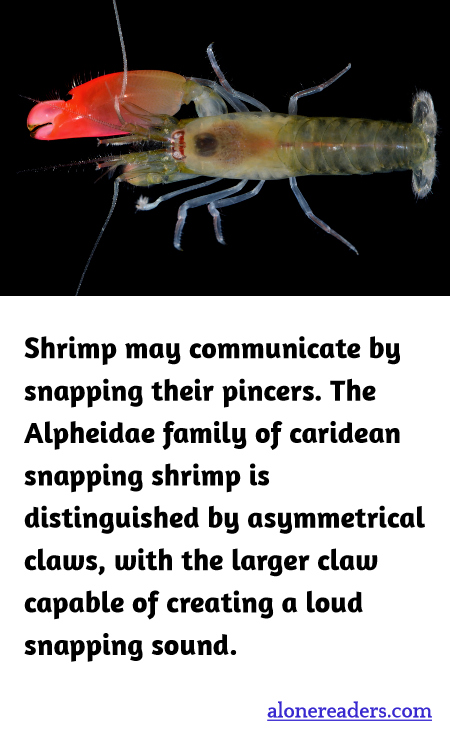
Shrimp, particularly those from the Alpheidae family, also known as snapping shrimp, have a remarkable method of communication and interaction that has fascinated scientists and marine biologists. These small marine creatures are equipped with highly specialized pincers; unlike other shrimp that have symmetrical claws, snapping shrimp possess one oversized claw that significantly stands out due to its size and functionality.
The larger claw of the snapping shrimp functions much like a communication device as well as a weapon. It can produce a loud snapping sound that is not only a means of deterring predators but also plays a crucial role in communication with other shrimp. The sound is generated when the shrimp rapidly closes its claw, creating a high-pressure bubble in the water. As this bubble collapses, it emits a loud popping noise. This phenomenon, known as cavitation, results in one of the loudest sounds produced by any marine animal relative to its size.
But the purpose of this snapping goes beyond self-defense. Research suggests that the snapping is a way for shrimp to communicate with each other. They might use this capability to signal danger, stake out territory, or even attract mates. This form of sound production is particularly advantageous in the murky waters of their natural habitat, where visibility is limited and communication through visual cues is not always possible.
Additionally, the frequency and volume of the snaps can convey different messages, varying from warnings to mating calls. This acoustic form of communication is crucial for the survival and social interaction of snapping shrimp. Studies have shown that colonies of these shrimp can be quite noisy, creating a cacophony underwater that can even interfere with submarine sonar and other acoustic instruments.
Understanding how snapping shrimp communicate is not only interesting from a biological perspective but also enhances our knowledge of marine ecosystems and the various forms of life within them. Their unique method of sound production is a reminder of the diverse and ingenious ways marine life interacts and adapiles their behavior to thrive in their environment.
