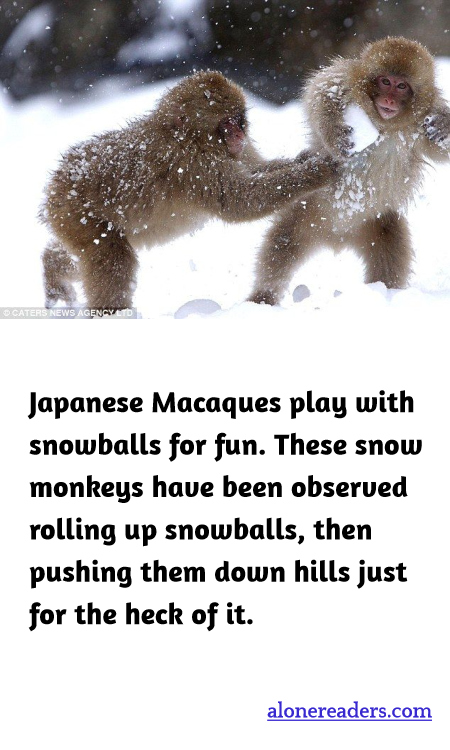
Japanese macaques, commonly called snow monkeys, have captivated observers with their human-like behaviors, particularly their playful interactions with snow. Found predominantly in the snowy regions of Japan, such as Nagano, these primates have developed unique adaptations to their cold environment, and their behaviors offer delightful insights into primate play.
Despite the harsh conditions of their habitat, Japanese macaques exhibit a surprising penchant for recreation. During the winter months, when the landscapes turn into snowy wonderlands, these monkeys engage in what can be described as snowball making and playing. Researchers and tourists alike have observed these monkeys meticulously rolling and patting snow into balls. It’s not entirely clear if they follow the same rules or goals that humans do when engaging in snowball fights, but the act of creating and interacting with snowballs appears to be a playful, social activity among the macaques.
What makes this behavior fascinating is its apparent purposelessness, in terms of survival. Playing with snowballs doesn’t provide food, shelter, or immediate physical advantages. However, ethologists suggest that play is crucial for the cognitive and physical development of young mammals, including monkeys. Through play, young macaques may learn motor skills that are vital for their survival and social interaction. Play-fighting with snowballs could also help in establishing and maintaining social bonds within the group.
Moreover, the act of rolling snowballs and watching them cascade down hills could also be a form of entertainment for these intelligent creatures. It suggests that macaques, much like humans, find value in play and leisure, engaging in activities that provide mental stimulation and perhaps even joy.
It’s a delightful reminder of the common emotional and social threads shared across species. The playful nature of Japanese macaques not only sheds light on the behavioral complexity of primates but also sparks a sense of kinship and wonder among those who watch these snow monkeys in their frosty, playful glory.
